"There is no such thing as bad weather, only bad clothing" - Swedish and Norwegian proverb.
Here I will share some tips on how to choose good hiking clothes and what to wear when hiking to keep you warm, dry, and happy during your adventures in Norway. I will not recommend any specific brands because in different regions you can find similar products from different manufacturers.
Check out our yoga and hiking retreats in Norway, and Nepal.
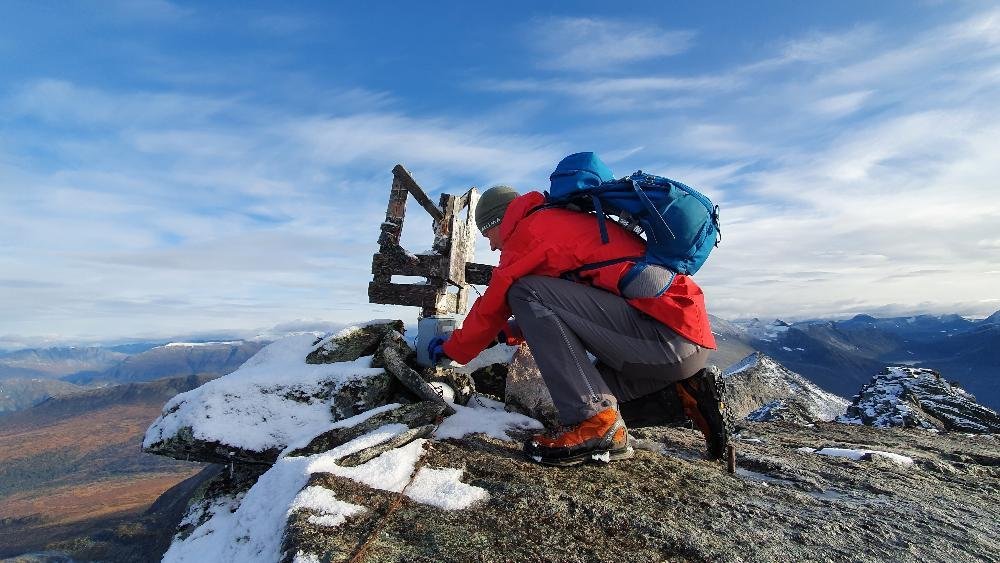
What to wear when hiking in summer-layers, zippers, and pockets
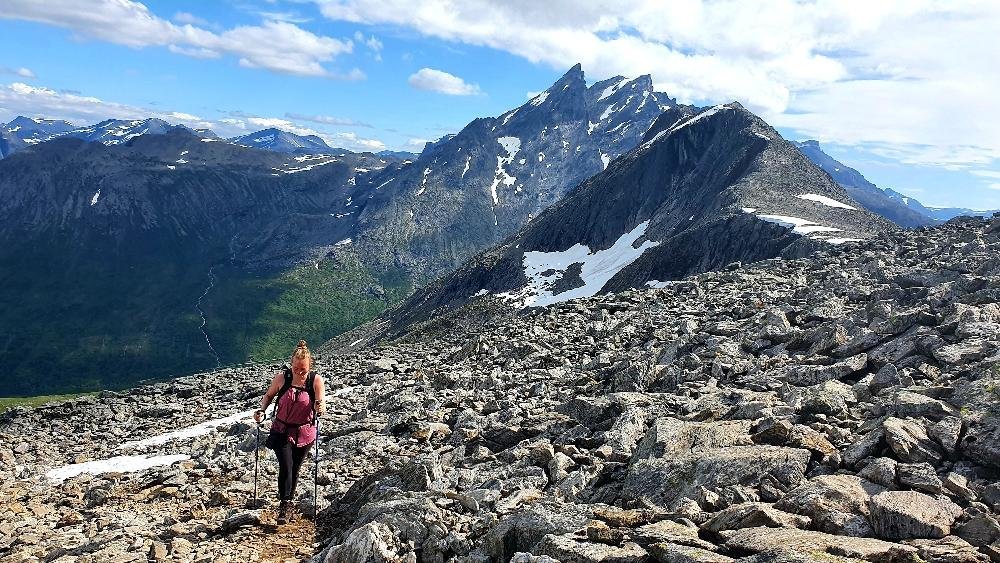
When I moved to Norway in 2013, I started hiking in my jeans, aerobic leggings and top, running shoes, and a light jacket. Although Norwegians thought it was strange (jeans are especially despised), I was not disturbed by it. My hikes were usually short and close to home. With time my hikes became longer and more complicated and I started to buy special hiking equipment. I discovered that the little improvements made a difference! For example, my backpacks got bigger but lighter and I replaced all my pants and jackets with ones that have ventilation zippers.
You start to notice the importance of clothing when you hike for several days in a row, your hike lasts for the whole day, or the weather changes suddenly. When you hike uphill you always get hot and sweaty. The contrast becomes clear when you reach the top of the mountain which is usually windy and cool.
If you want to sit down to eat, relax, and enjoy the view, you instantly feel the cold creeping in. On the way down your legs are already tired so you must take extra care not to stumble and fall. That means hiking at a slow pace with sweaty clothes and rubbing shoes. Suddenly you may find that hiking is not so enjoyable anymore. Fortunately, all this is avoidable when you take advice from experienced hikers.
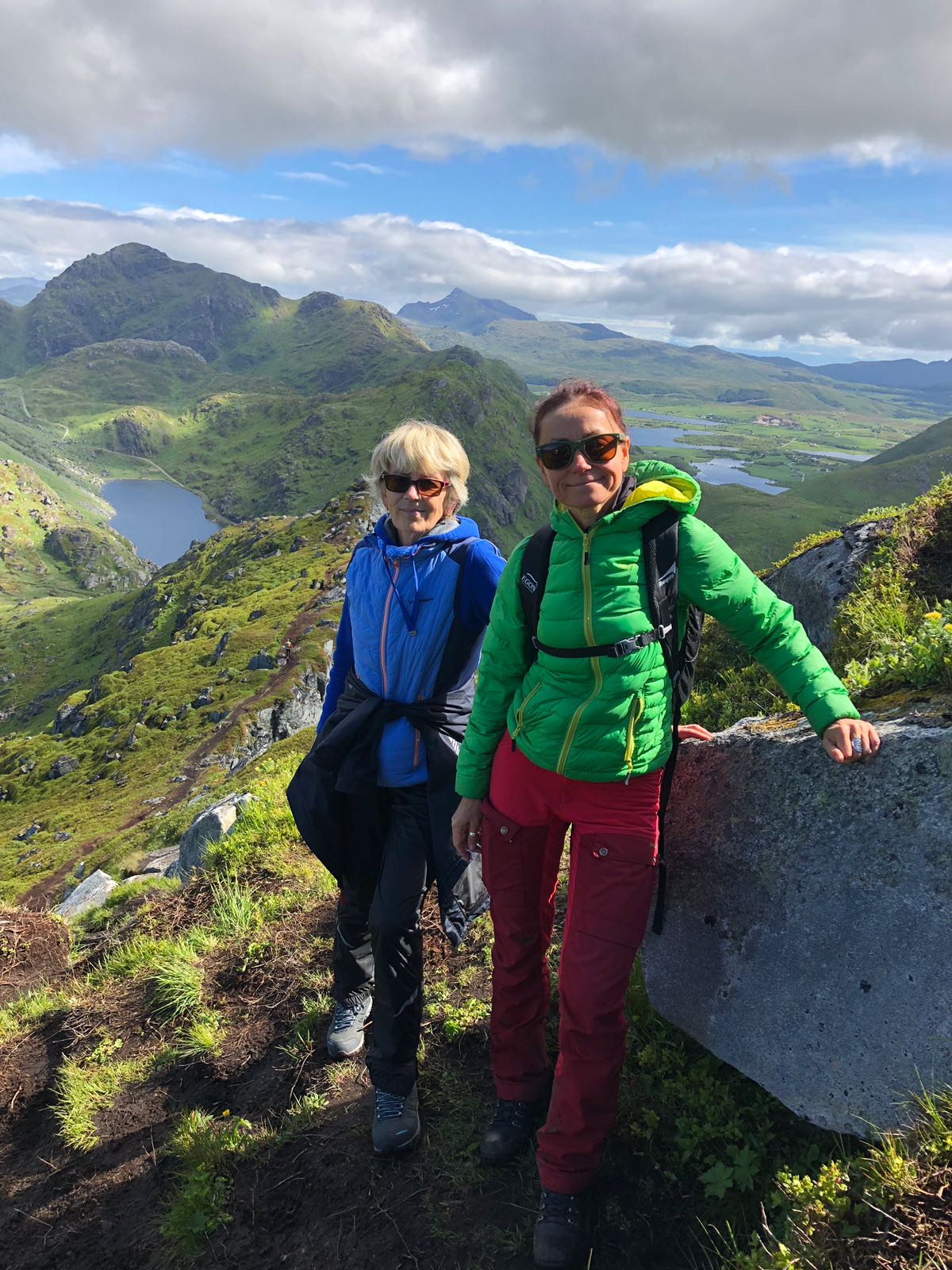
The most important thing about hiking clothes is layering. This tried-and-true strategy helps you regulate temperature by slipping layers on and off as your activity level or the weather changes. You may not want to wear a lot of layers at the start of your hike but it’s a good idea to take them with you on every outing - you can peel off layers when you get hot but you can’t put on layers that you didn’t bring along.
The base layer should wick sweat off your skin
I am not going to talk about underwear which should be comfortable every day, not only when hiking. But I want to talk about T-shirts. Wool is very popular in Norway: summer wool, merino wool, smart wool, old fashion wool, etc. If I'm honest, I don't go along with fashion trends easily, but buying myself a light, summer merino wool T-shirt was a very good idea.
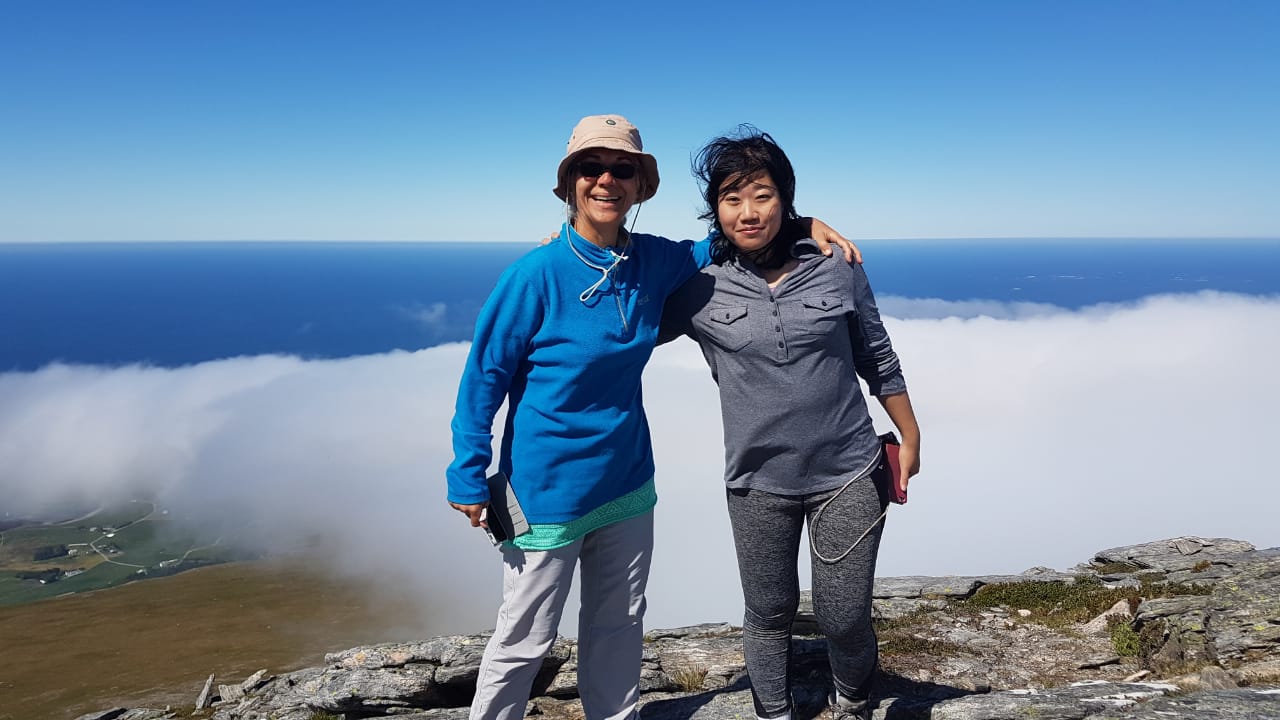
When hiking with a backpack, your shirt must have sleeves. It is very uncomfortable to feel the backpack strap under a sweaty armpit on a warm summer day. A cotton T-shirt is not the best choice because it dries slowly. I recommend a light wool or synthetic T-shirt for warm weather or a long-sleeved shirt for cooler weather. Choose materials that insulate, wick moisture, and dry quickly.
The same goes for socks. A hiking sock is crucial to prevent blisters. A hiking sock, unlike a cotton sock, provides significant protection against rubbing that your boot might cause. Low-cut socks are not a good choice for hiking, choose crew socks instead.
The middle layer should insulate
Of course, it all depends on the weather but you should always have a long-sleeved sweater or a fleece in your bag. I love fleece hoodies because I always forget my hat at home and they help to keep my head warm. I prefer light hoodies that breathe well. Pullover hoodies might be difficult to put on, so I prefer ones that have zippers.
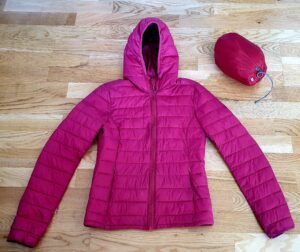
Down-insulated jackets are my favorites because they are highly compressible and easy to pack in your bag, also down offers more warmth for its weight than any other insulating material.
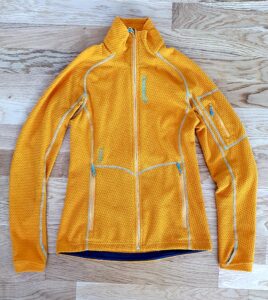
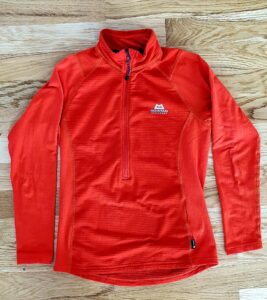
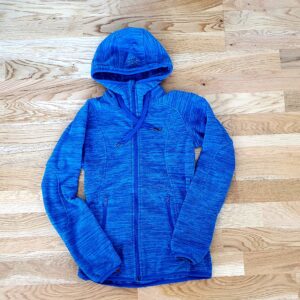
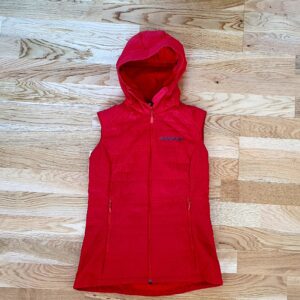
The outer layer should shield you from rain and wind
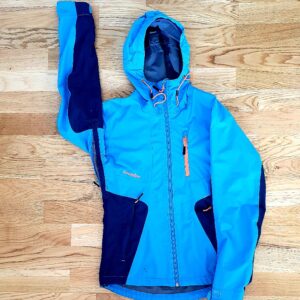
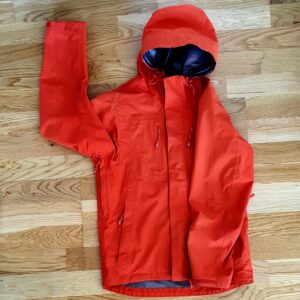
The outer layer (or shell layer) protects you from wind, rain, and snow. Shells range from pricey mountaineering jackets to simple wind-resistant jackets. Most allow at least some perspiration to escape; virtually all are treated with a durable water-repellent finish to make water beads up and roll off the fabric.
Your outer shell is an important piece in stormy weather because if wind and water are allowed to penetrate to inner layers, you can get really cold. Pit zips under the armpit are again important. The ideal would be lightweight, wind, and waterproof material but usually, if you want significant protection against the rain and wind then you might need to make a trade-off on weight.
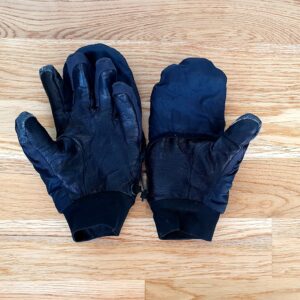
Hiking pants
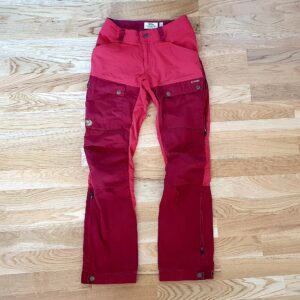
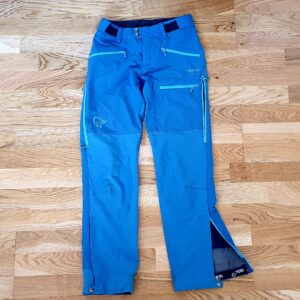
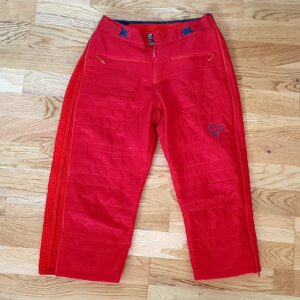
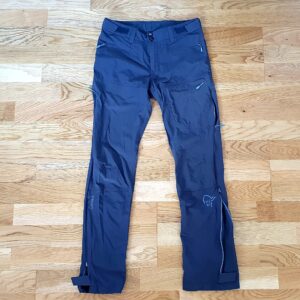
I think I would love hiking pants that can be turned into shorts by unzipping the long pant legs. Unfortunately, I do not have them yet. But I have several breathable, windproof hiking pants with ventilation zippers and I love them. It is important for me that they also have pockets with zippers - the more the better. Otherwise, my keys, phone, and other things would disappear fast. The material of hiking pants is also crucial. Your pants should be lightweight, soft, stretchy, and windproof. I also have a pair for heavy rain. You mustn't have to take your boots off when you pull on your rain pants. That means a zipper on the side of the pants.
Hiking boots or shoes
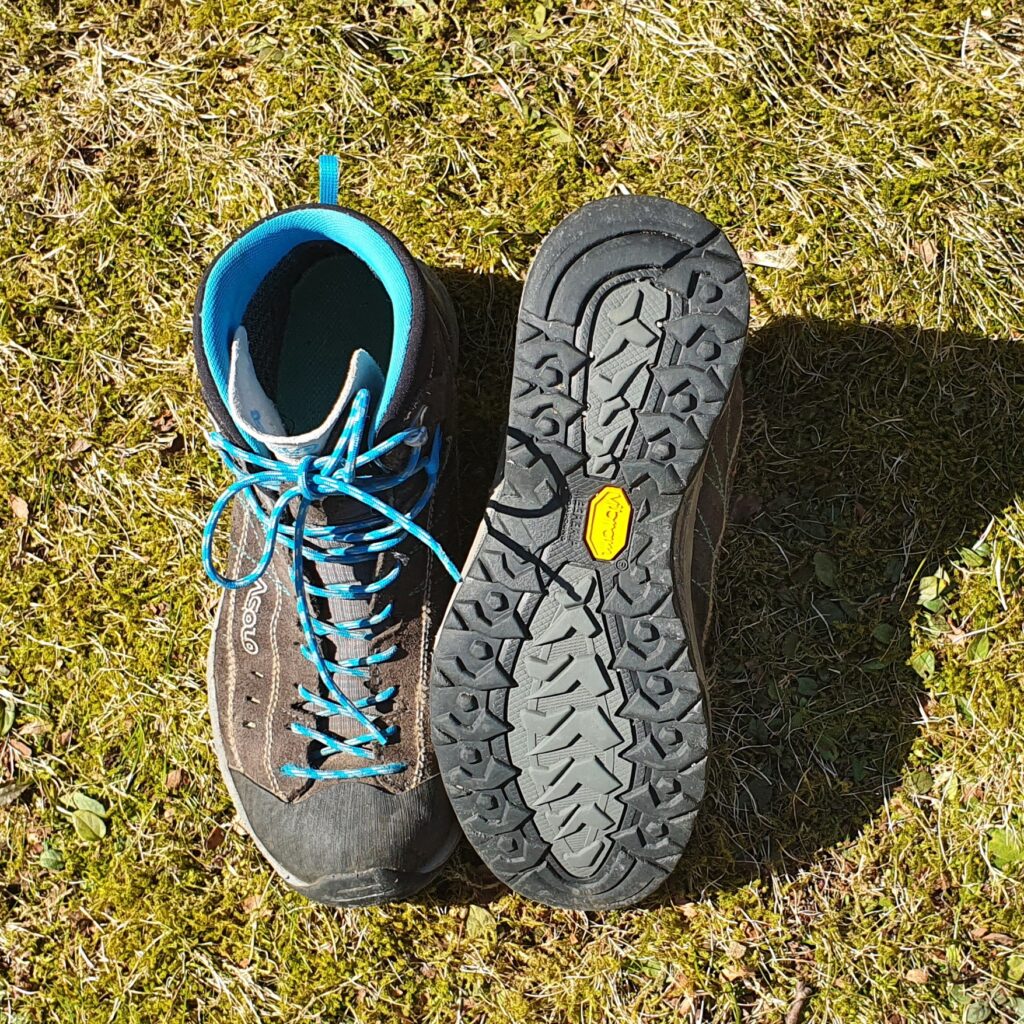
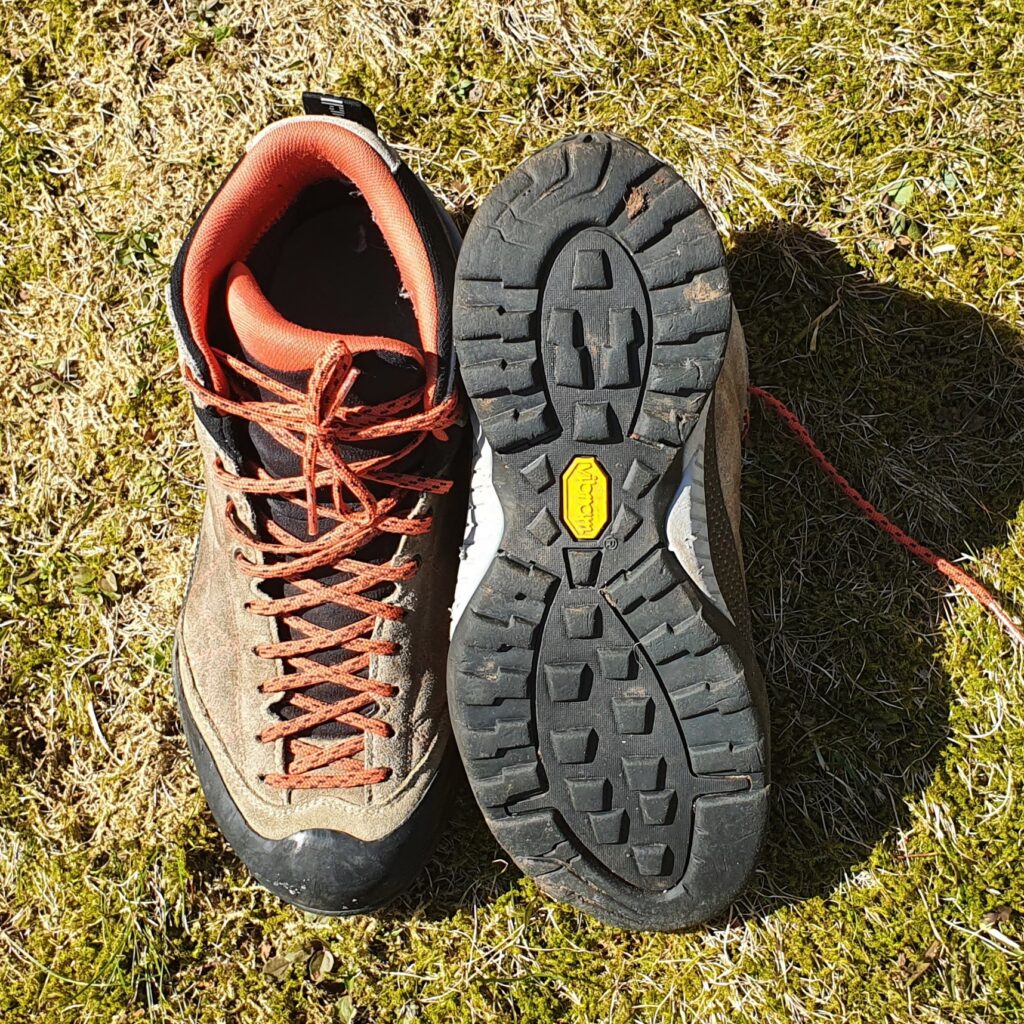
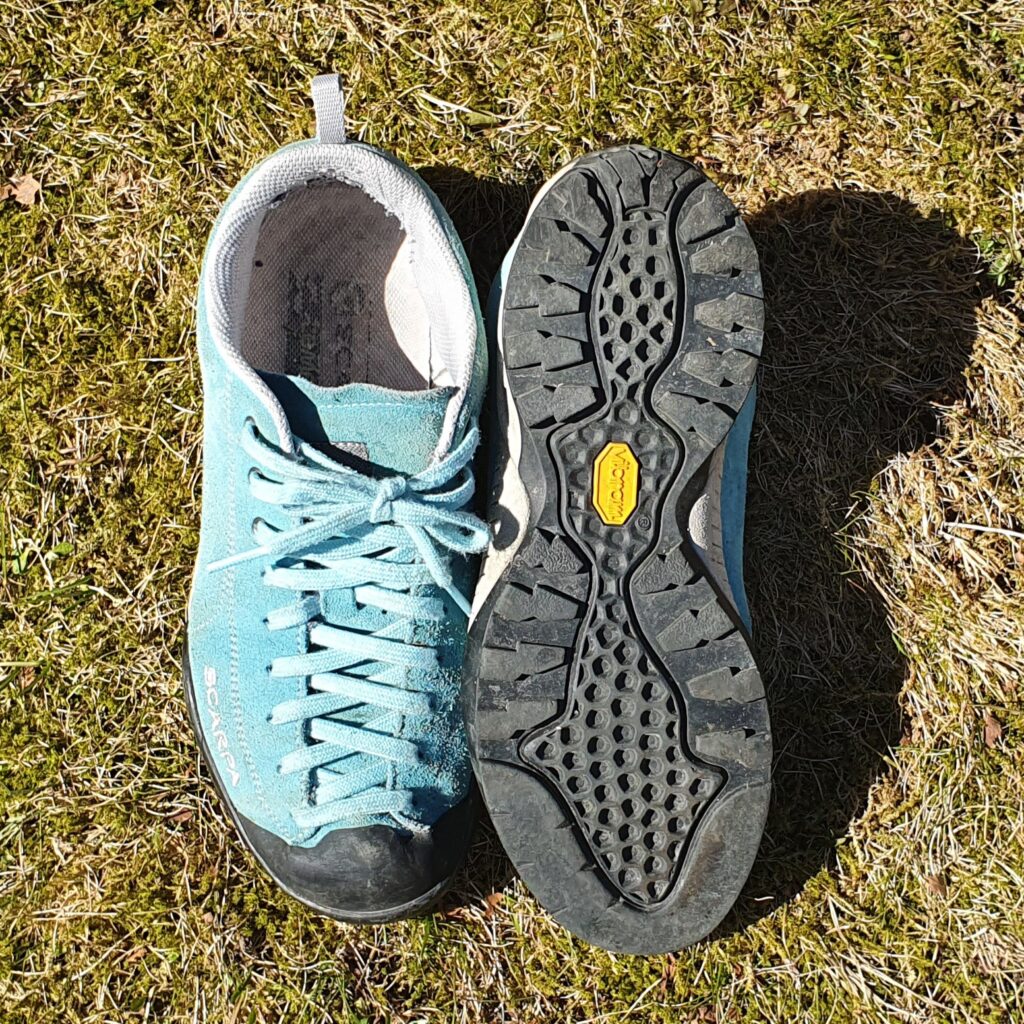
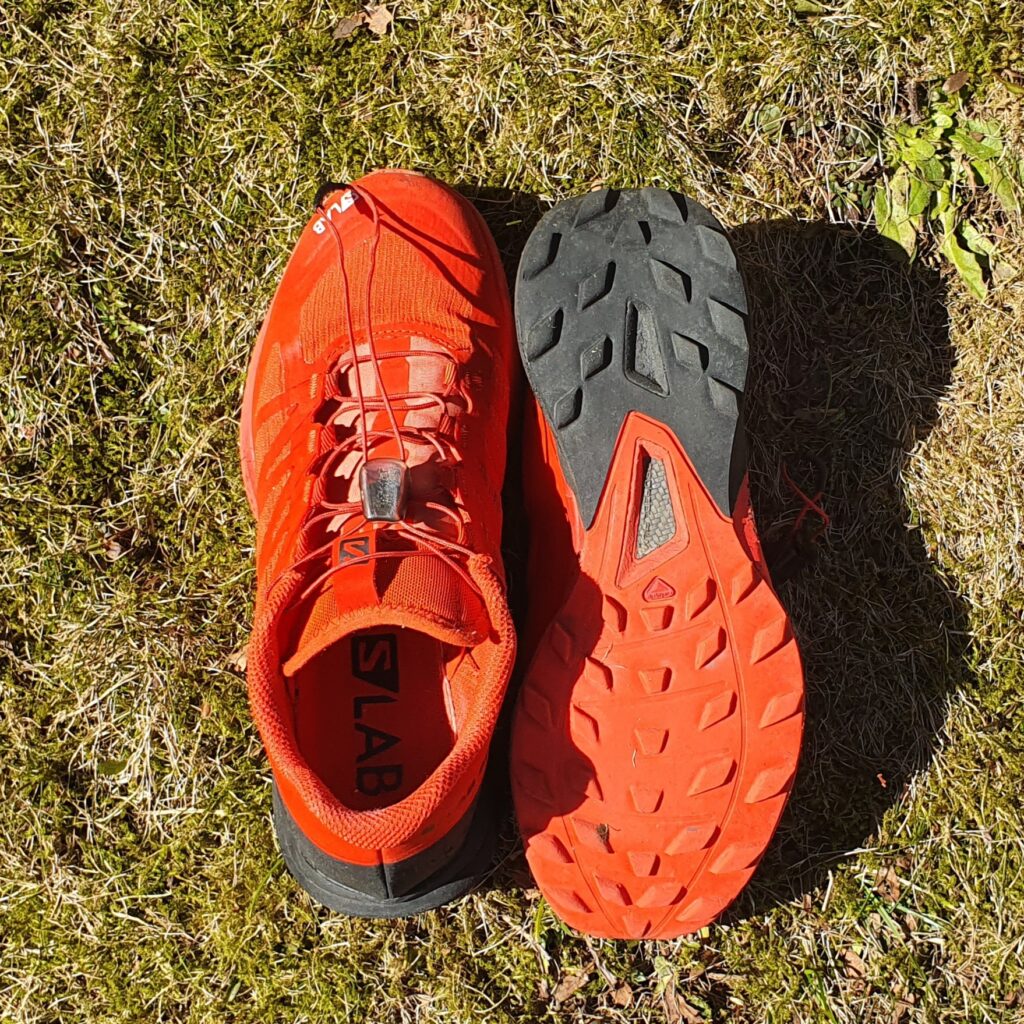
One of the most important things you wear on the trail is shoes. Low-cut models with flexible midsoles are excellent for hiking on a warm summer day. I prefer lightweight, flexible, mid or high-cut hiking boots with a good grip. My boots are not 100% waterproof but they are water-resistant. Always wear your new shoes at home or on short hikes before going out on longer hikes. After hiking remove the insoles of the shoes and clean them properly. Remember to also reapply for a DWR treatment every once in a while.
Hiking hats
When you go hiking in the Norwegian mountains, you often need woolen clothes and hats – let’s face it; being situated in the Arctic Circle does have its natural effect on the temperature.
The Norwegian Trekking Association (DNT) came up with a clever way of making layers and dressing up for the cold, a lot more fun. In 2014 they launched the Norwegian Mountain Pick Up Code, which might cause your hat to give you more than warm ears – depending on which color you choose to wear.
The main rules are rather simple:
If you are single, you wear a green hat. If you are in a relationship, you wear a red hat. And if you see someone wearing a yellow hat, they might be open to a flirt.
DNT launched the Pick Up Code initially as a prank for April Fools’ Day. However, adventurous Norwegians embraced the game, and now you can use the Norwegian mountains as your very own real-life Tinder. Just make sure to not stand by a cliff when swiping someone to the right! Read more about how to behave when flirting in the mountains in Norway here.
I prefer a cup and a jacket with a jacket with a hood for hiking in the summer which protects the head from the wind and sun. However, in cooler weather, I always have a warmer hat in my bag.
"Hiking Retreats packing advice" YouTube video for Norway hiking and yoga retreat is here.
The life of a freelance yoga instructor, self-defense teacher, and adventure sports writer involves a lot of free time. I used to devote an embarrassing amount of that free time to trawling the Yoga Trade website. The secret to using the site well is to know when to daydream about an opportunity, when to seize it, and to love what you find. So when I saw a listing looking for yoga teachers to assist hiking retreats in Norway, I knew it was time to pounce. I just didn’t know that pouncing would change my life.
I’ve always wanted to visit Norway but it’s notoriously expensive and I’ve never had the money to go. I’ve lived above the 60th-degree latitude so I knew what I was getting into. I’ve worked as a hiking guide, I’m a natural history nerd, I have wilderness first responder training, I’ve been teaching and practicing yoga for over 30 years. I knew I was perfect for the job. I just had to convince the woman running the retreats that I was perfect for the job.
I was at a yoga retreat in Bali when I saw the listing, so I had limited internet access and no cell reception. I crafted a carefully worded letter of introduction, gathered my CV and a few yoga photos, and tried to send them off. The message didn’t appear to land, so I bombarded this poor woman at every portal I could access: YogaTrade, WhatsApp, Facebook Messenger, and her personal email. I don’t know if she was impressed or annoyed, but she called me within a day. After a week of communication, I was able to convince her to stop looking at other applications and bring me to Molde for the month of August.
I neglected to research my remarkable hostess. Pille Mitt was born in Estonia when it was part of the USSR. She grew up under an authoritarian regime that denied the most basic freedoms I often take for granted- the ability to choose where I want to live, travel, and pursue an education or career. With the collapse of the Soviet Union Pille was able to offer exercise classes and eventually open her own gym. Online dating brought her to Molde, Norway, where she lost the guy but found a new home. A yoga teacher training in Rishikesh opened new windows, and now she teaches at both yoga studios in town and offers yoga and hiking retreats in various locations throughout the year. “I have to stop having such a good life!” she jokes. “Time flies when you’re having fun, so my life is passing too quickly!”
I also neglected to research the hikes. The first day we warmed up with a casual stroll out of town which led to the ascent of a nearby peak. Then we hiked a mountain overlooking the next day’s destination, with the option of climbing a nearby twin summit. One day saw us ascend steep muddy slopes to the Troll’s Church, a limestone cavern with a 40 ft waterfall inside. We traveled by ferry and car, climbed mountains, crawled through caves, jumped in alpine lakes, and swam in the frigid Atlantic. Each day brought stunning vistas, the option to picnic and relax or hike as hard as we could. One day was a glorious road trip up a series of hairpin turns to a precariously perched restaurant and café. We dispersed like a flock of birds and came back together to meditate on a quiet ridge.
The first group was all female, and we bonded like the loving family I never had. Two Lebanese women and an Israeli woman broke bread together every day; they are not allowed to travel to each other’s homes and would probably never have met otherwise. We pushed each other to hike harder and relax more deeply, comforted and inspired each other, learned from shared stories of triumph and failure. I’ve led groups from southeast Alaska to Southeast Asia and never experienced one with more authentic love or less bitchy drama.
Over the following month my life fell into a simple rhythm: wake up, meditate, plan yoga classes, do yoga, eat breakfast, hike all day, teach yoga, eat dinner, fall asleep, wake up and do it again. Rainy days invited a road trip, a philosophy discussion, an extended yoga class, a shorter hike. After the first group left, Pille and I had two half days free. We scheduled an outdoor community yoga class, shopped for food, and went for a hike. When you’re doing what you love, you never want a day off.
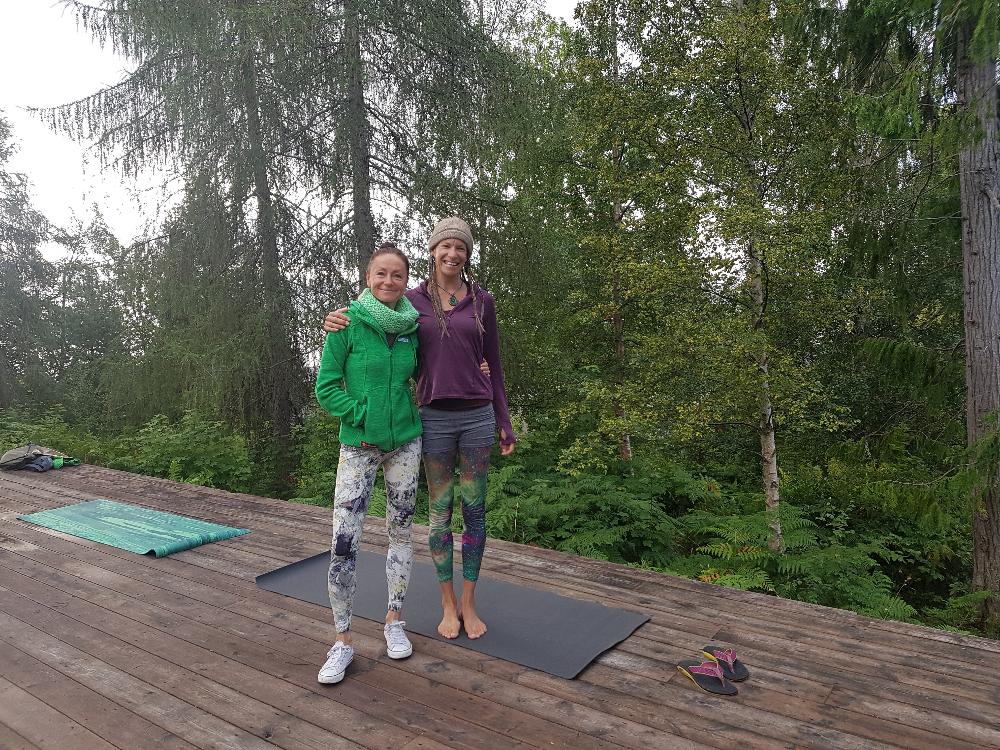
Pille and I cried when I boarded the bus for Oslo. We are both intense athletic tomboy powerhouses and were afraid we wouldn’t meet another kindred spirit until our paths crossed again. Fortunately, that won’t be long. We plan to lead yoga and hiking retreats together in Alaska, Norway, and California in 2020. Guests from last August have already signed up, eager to hang out with us again. We are considering offering yoga teacher training together in 2021. The only bummer is I don’t have time to daydream about opportunities offered on Yoga Trade anymore. I’m too busy living them! Love what you find!
Read more about our yoga and hiking retreat in Norway here.
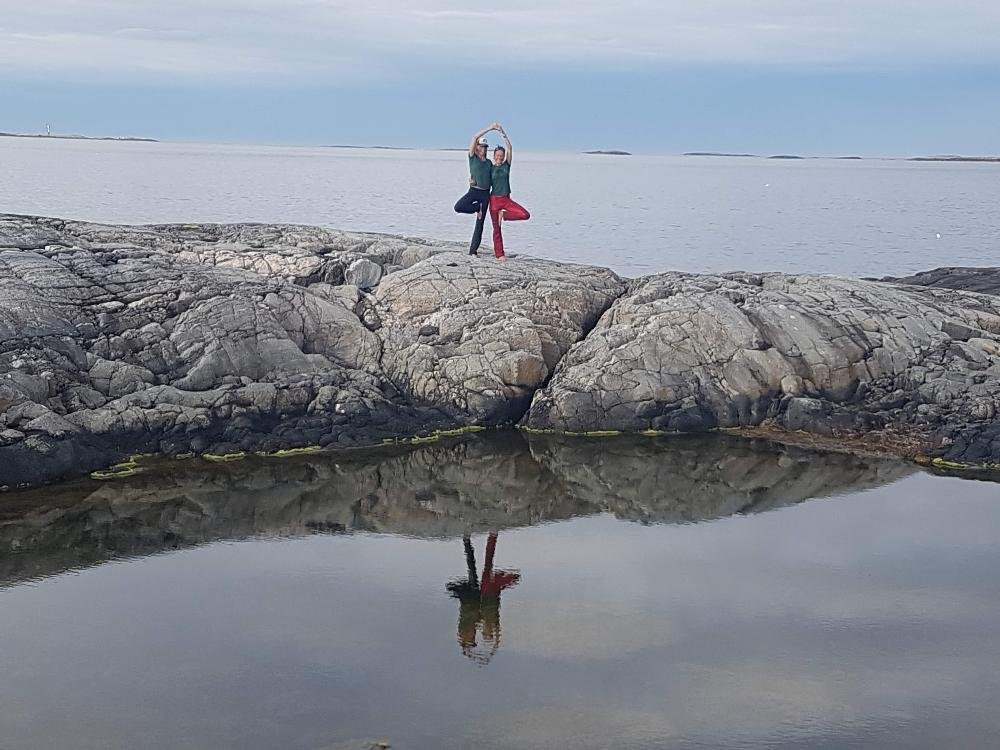
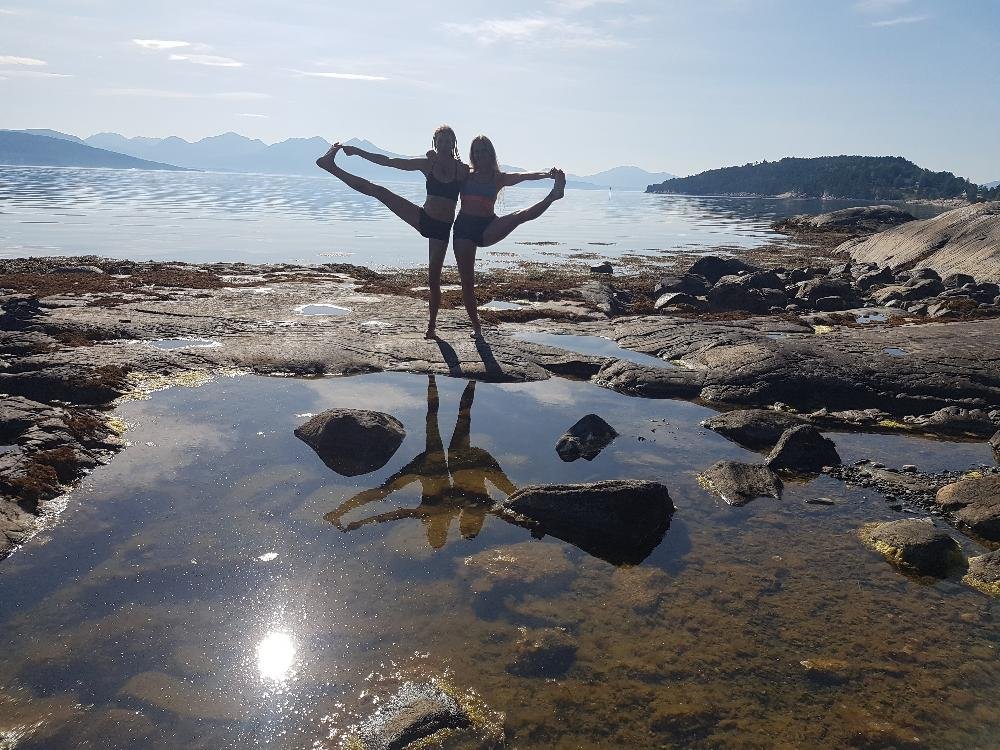
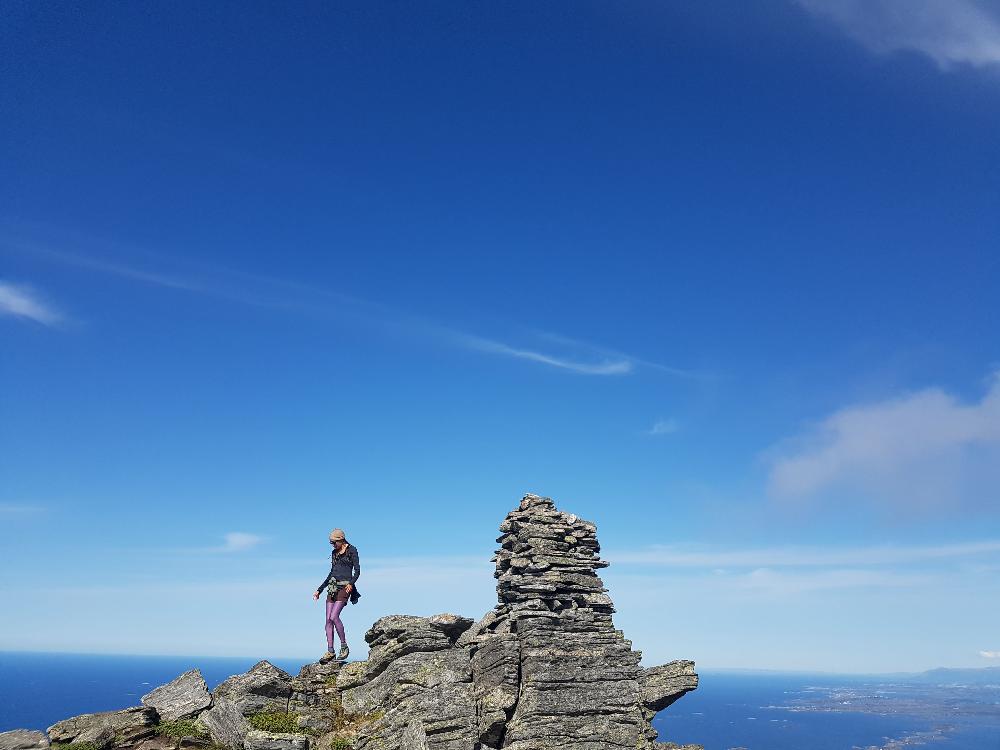
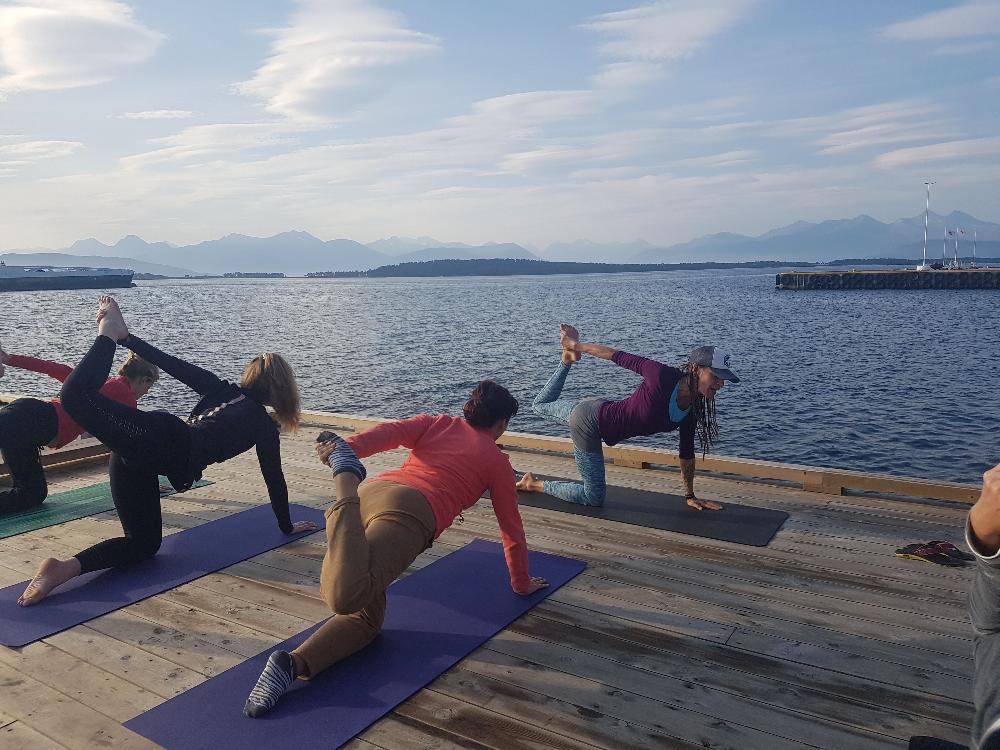
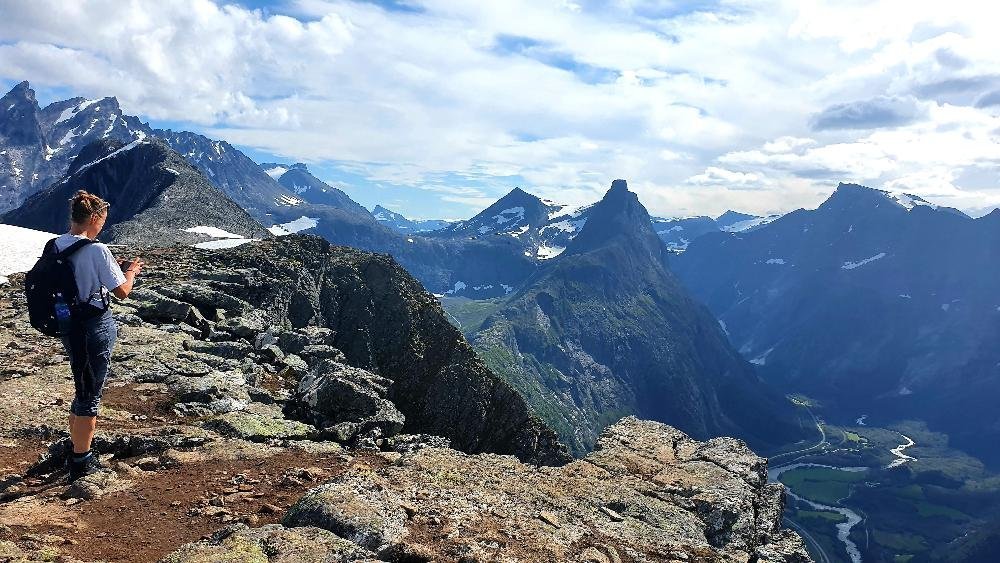
Romsdalseggen ridge is one of the world’s most scenic hikes (Lonely Planet 2011). This hike through the dramatic landscape features many highlights. From the ridge, you can see the majestic Trollveggen cliff, surrounded by a number of well-known mountains. Romsdalseggen ridge is one of the most spectacular backdrops in the world, not far from the mountaineering capital Åndalsnes.
- Total distance: 10,5 km
- Total time: 6/8 hrs
- Total hight: 1222 m.a.s.l. Mjølvafjellet
- Difficulty level: 4/5 - moderate difficult hill walk, some scrambling involved, short exposed sections.
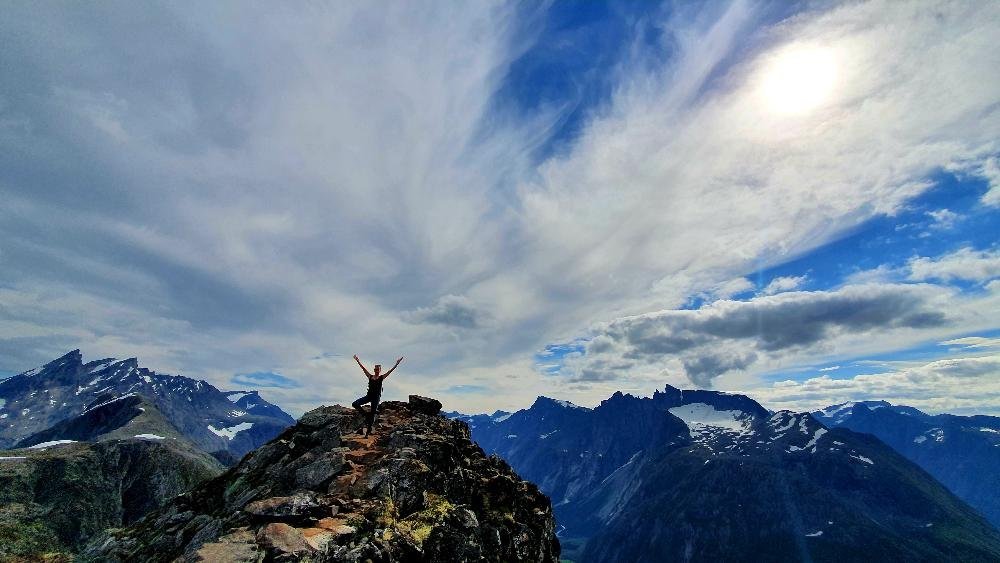
The ascent is hard-going and steep, but the view that awaits you at the top is well worth the effort! From the ridge, you look directly at the legendary Trollveggen cliff, Europe’s highest perpendicular rock face – crowned by rugged mountains. To the southeast, you can see the Dalsida landscape protection area, which extends all the way to the Dovrefjell and Sunndalsfjella mountains, with the highest peak Snøhetta.
The mountains Romsdalshorn and Store Venjetind tower-like spires into the sky. It is not hard to understand why this sea of jagged peaks, ridges, and wild precipices has drawn mountaineers to the area for centuries. To the southwest, you can see Reinheimen National Park and the well-known mountains Bispen, Kongen and Dronninga. From Romsdalseggen ridge, you also get a view of Romsdalen valley, with the Rauma river winding its way through the lush landscape out to the fjord and Åndalsnes.
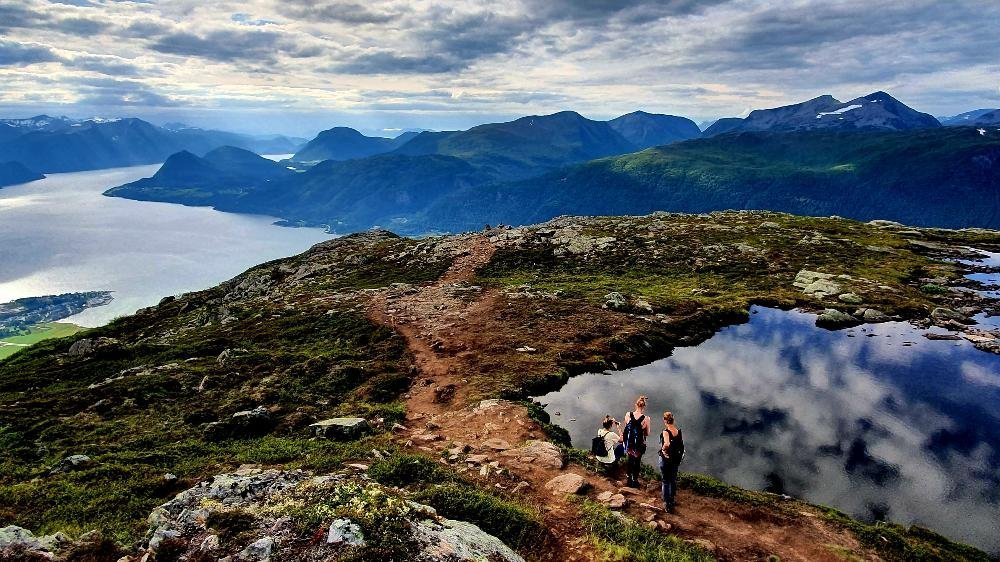
How to get in Romsdalseggen trailhead
Romsdalseggen ridge hike is not circular. It starts in Venjesdalsetra and finishes in Åndalsnes. You can take a special bus from Åndalsnes or you need two cars. The bus runs daily in the summertime, from June until September. You can book your ticket here. It is easy to find the bus stop, it is in front of the Climbing Museum or Norsk Tindesenter/Tourist Information/train station.
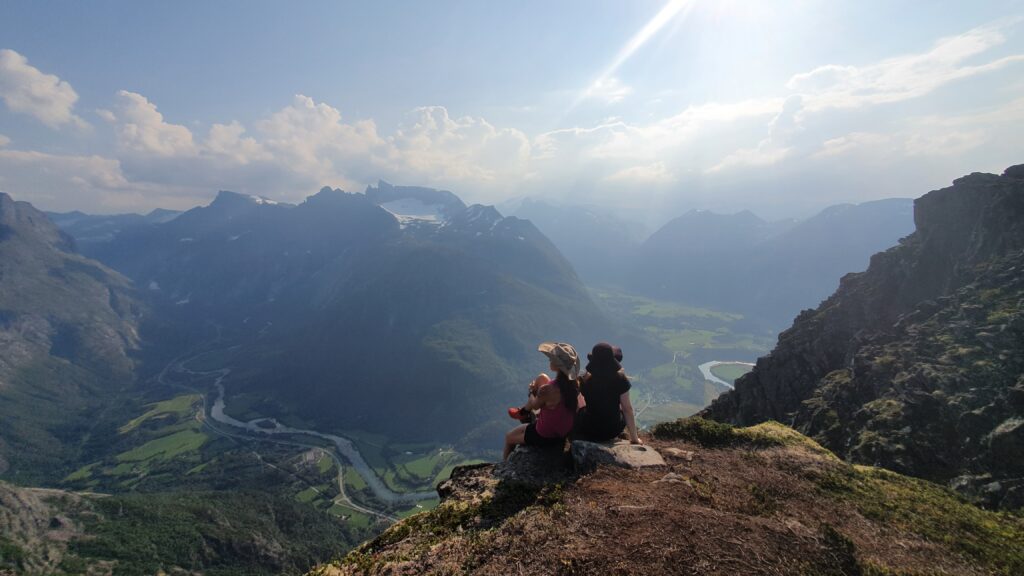
Romsdalseggen hiking trail
The trail is easy to follow, marked, and signposted with red dots. Besides the red trail marks, there are additional posts showing the progress of your hike.
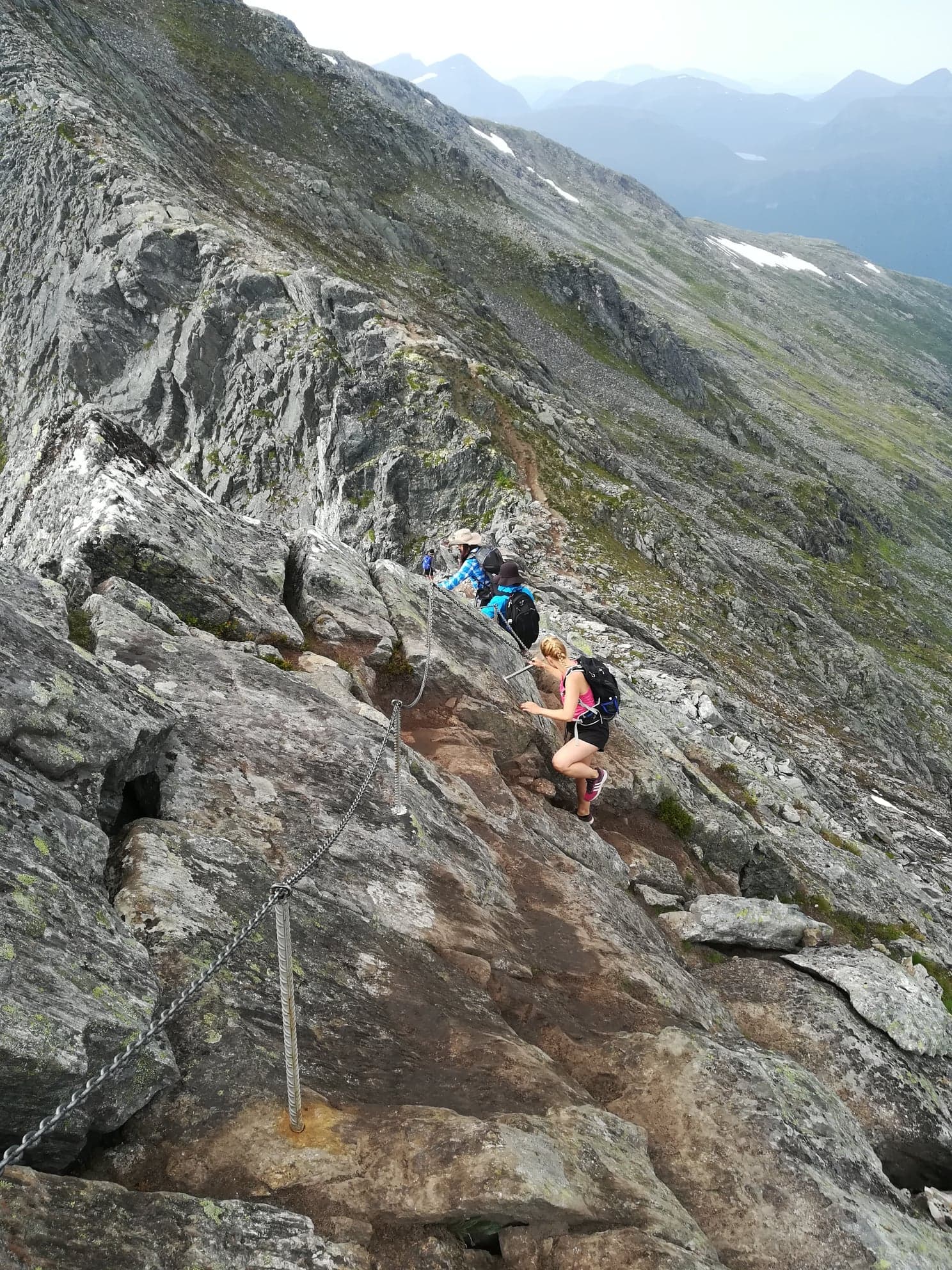
If you are not particularly fond of airy ridges, you can take an easier path that bypasses the steepest and airiest sections. It also starts at Venjedalssetra and only forks from the main trail at 2,5th kilometer, at the plateau, and is signposted to Høgnosa. It joins back the main trail on the 7th kilometer. Taking this trail will add 2 extra kilometers to the hike. but to tell the truth, all descents and ascents which could be challenging, are secured with chains which are very helpful.
At the end of the ridge, Nesaksla has located an old, cute stone hut, a brand-new Eggen restaurant, and Romsdalens Gondola. From here it is a steep and hard descent from over 700 meters down to Åndalsnes. Despite the Sherpa steps (steep stony steps built in 2013 by Nepalese Sherpas), it can be a struggle to walk down, painful and hard on the knees.
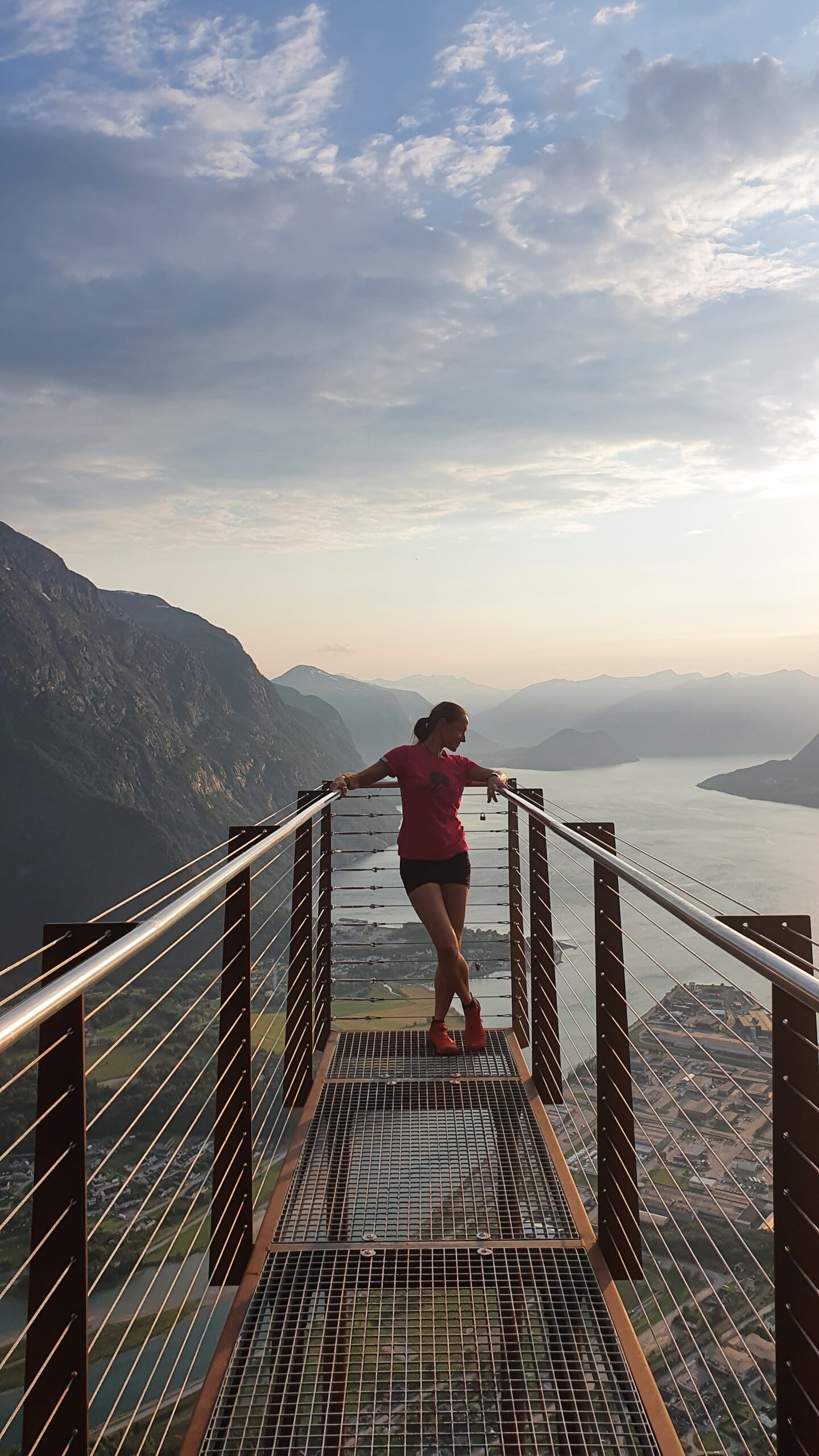
In May 2021 opened Norway's longest skylift - The Romsdalens Gondola. Romsdalsgandolen is the longest cable car in Norway, the idea of this cable car appeared in 1964 and the ride takes about 5 minutes. The maximum speed is 10 m/s, and the climb reaches 73 percent. The cabins are able to carry 45 passengers and depart every half an hour, but it is promised to run it continuously if awaiting passengers will appear. The gondola departs from the town center of Åndalsnes (next to the Tindesenter museum) and goes to the top of Nesaksla mountain. Once at the top, you can enjoy a 360-degree view of your surroundings, including the famous peaks Romsdalshorn, Store Vengetind, and Kirketaket. Indulge not only your sense of sight but your sense of taste as well and visit Eggen Restaurant at the top of Nesaksla. The restaurant offers traditional, seasonal, and local cuisine with unobstructed views over Romsdalen. Walk along the nature paths before heading back down to Åndalsnes. You can choose to ride the gondola back down or hike down the mountain which allows you to visit the famous Rampestreken viewpoint on the way. The gondola runs year-round and is suitable for people with disabilities.
Would you like to join us in the Romsdalseggen hike? You can see a selection of our guided day hikes here.