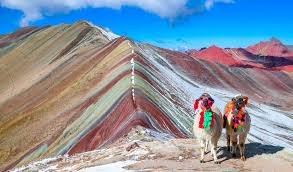
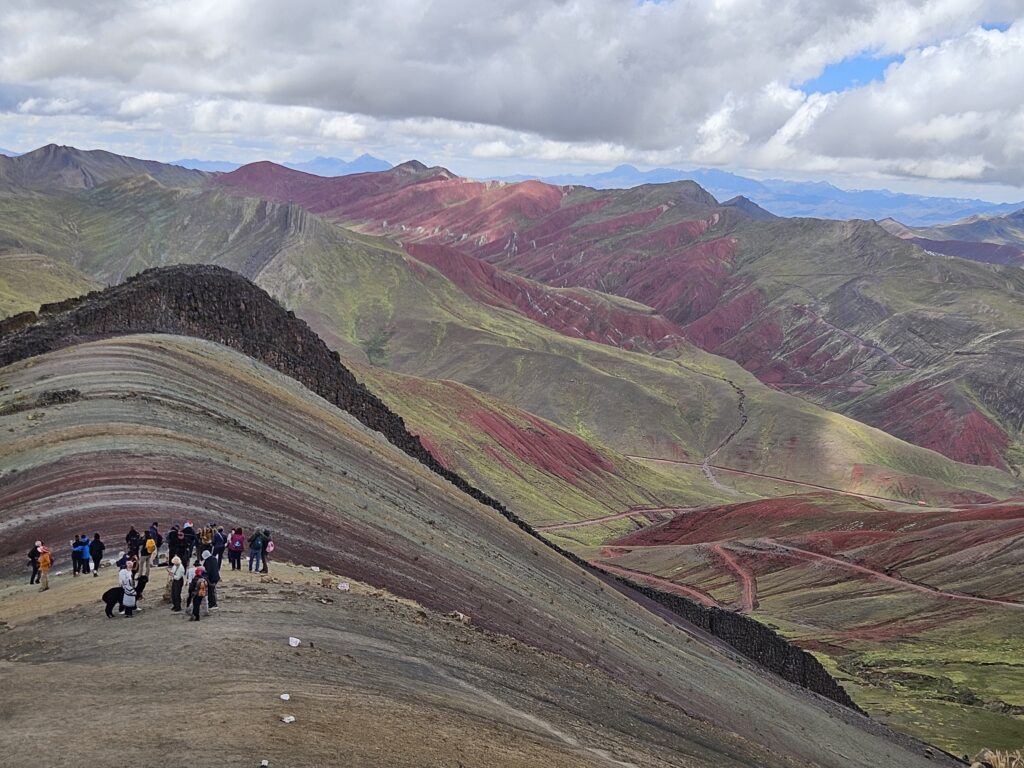
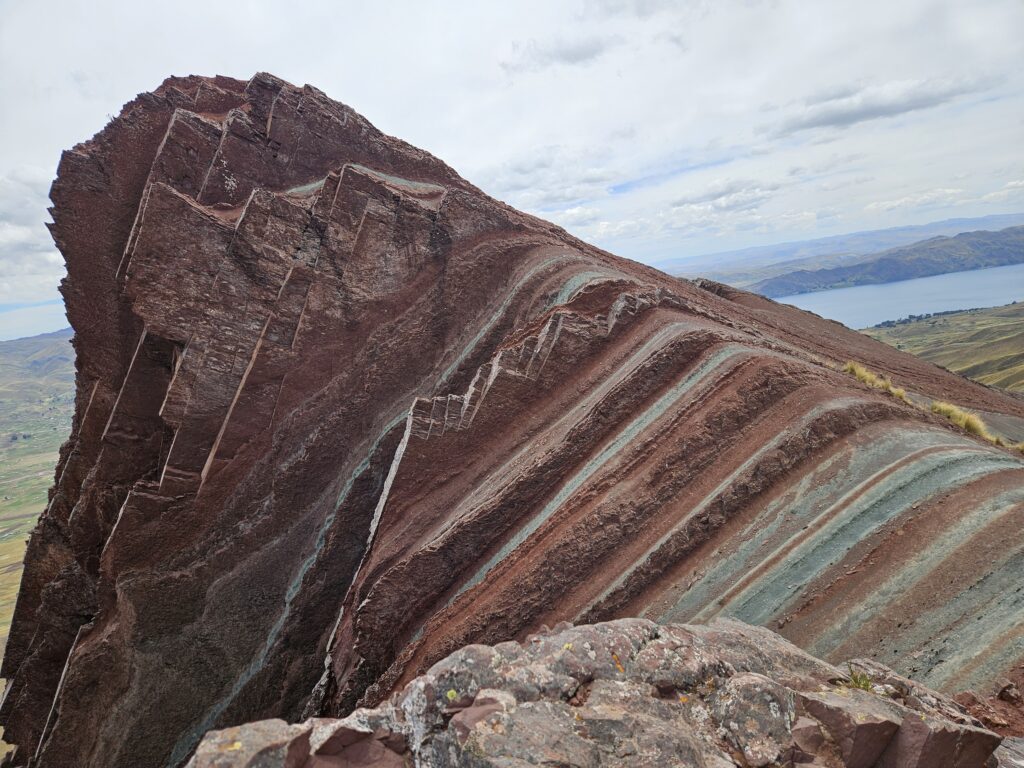
The region around Cusco is home to some of the most surreal landscapes on Earth — and the iconic Rainbow Mountain is only the beginning. What many travelers don’t know is that there are actually three spectacular “rainbow” mountains: Vinicunca, Palccoyo, and Pallay Punchu.
Each of them offers a different experience, different levels of difficulty, and a unique feeling of connection to the Andean mountains.
During my latest trip to Peru, I visited Palccoyo and Pallay Punchu, and I’m excited to share both the practical facts and my personal experiences — mainly because I’ve struggled with altitude sickness before.
Getting There: What to Expect on the Drive
For both Vinicunca and Palccoyo, the journey from Cusco is long and usually starts very early. Most tour companies pick you up from your hotel in a minibus around 3, 4, or 5 AM. The roads are long, winding, and curvy, and after about 1.5 hours, you typically stop for breakfast and a toilet break. From there, it’s another 1–1.5 hours of driving to reach the starting point of the hike. If you don’t tolerate curvy mountain roads or spending hours bouncing around in a bus, it’s better to pay more and take a taxi instead. You don't have to book your trip weeks in advance. Cusco is full of tour companies. I can recommend our tour guide, Silverio, and his company, Banderitas.
Vinicunca - The Iconic, Classic Rainbow Mountain
Vinicunca is the most famous of Peru’s Rainbow Mountains — the one that appears on postcards, Instagram, and travel brochures around the world. But what many people don’t know is that this spectacular mountain was hidden entirely until recently.
Before 2015, Vinicunca was covered entirely in snow and ice. Only in recent years has climate change melted the snowpack, revealing the striking, colorful sedimentary layers beneath.
The same phenomenon also uncovered the rainbow formations at Palccoyo.
Although the sudden reveal of these natural wonders is deeply connected to global warming — and therefore alarming — the Peruvian government officially opened Vinicunca for tourism in 2015.
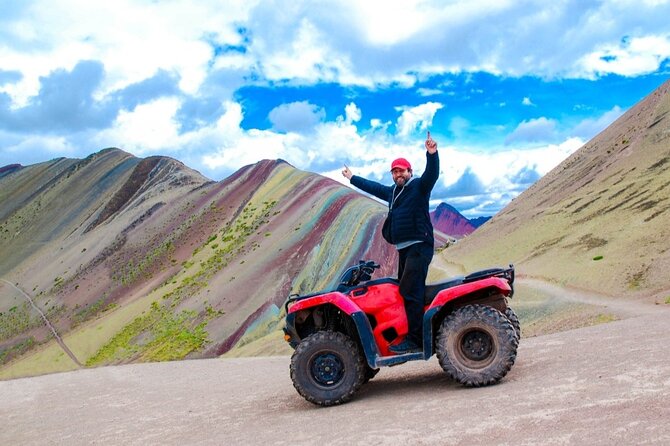
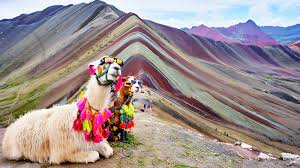
What to Expect Today
- Altitude: 5,036 m
- Hiking time: 2–4 hours
- Difficulty: Moderate to hard
- Crowds: By far the busiest of the three
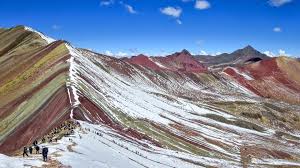
Vinicunca quickly gained massive popularity on social media, and by 2019, heavy tourist foot traffic had already worn down the main hiking path. Today, it remains one of the most visited attractions near Cusco.
The hike itself is short but steep, and the high altitude makes every step feel intense. Yet the reward is breathtaking — bold stripes of red, purple, yellow, and turquoise stretching across the valley, with the Ausangate Glacier glowing in the distance.
If you want the classic, iconic Rainbow Mountain experience — and don’t mind crowds or altitude — Vinicunca delivers a powerful view and a strong sense of achievement.
Palccoyo - The Easier, Quieter Alternative Rainbow Mountain
(My personal experience)
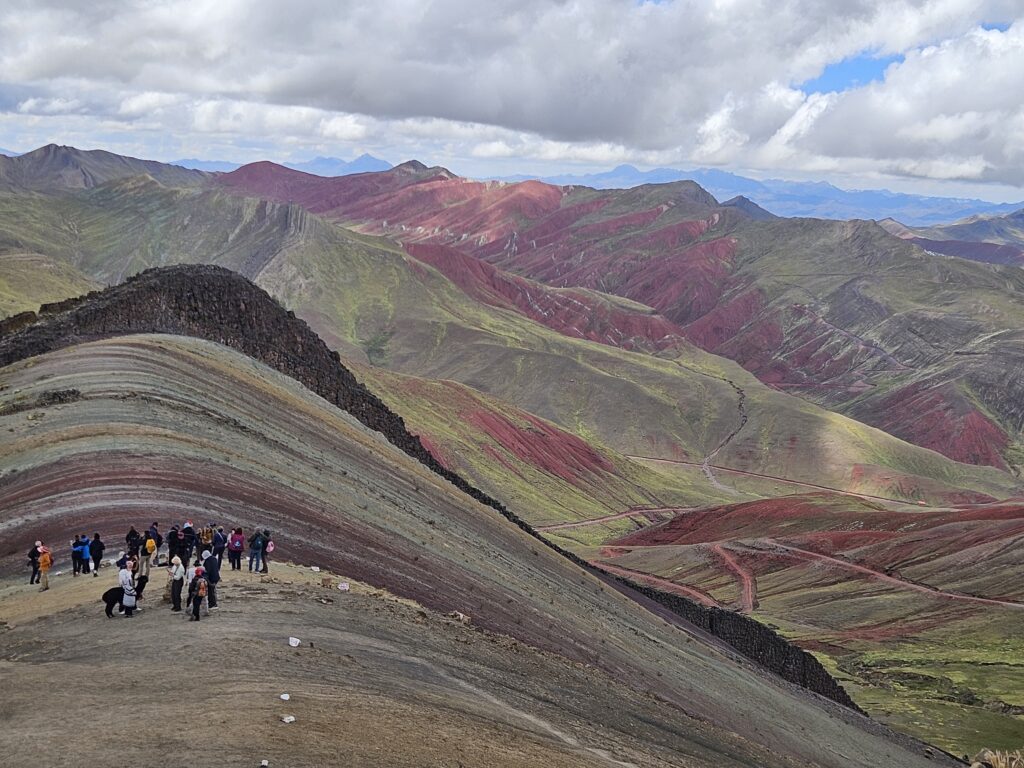
Palccoyo is known as the “alternative” Rainbow Mountain — softer colors, gentler terrain, and far fewer people. I found it to be an excellent introduction to Peru’s high-altitude hikes.
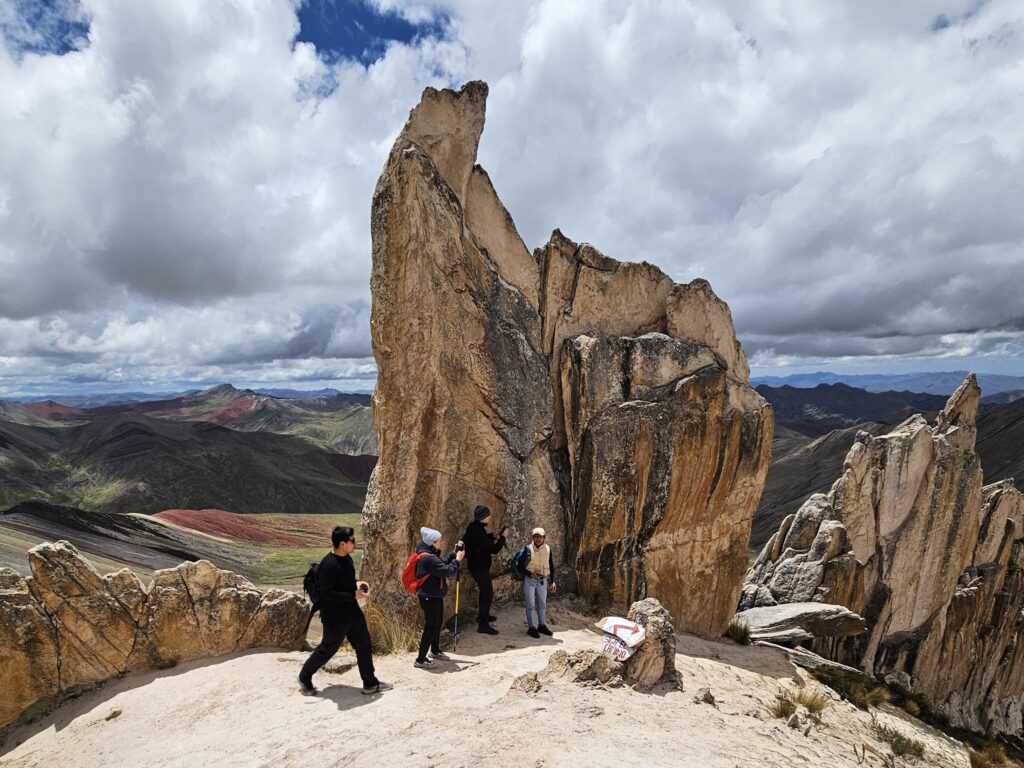
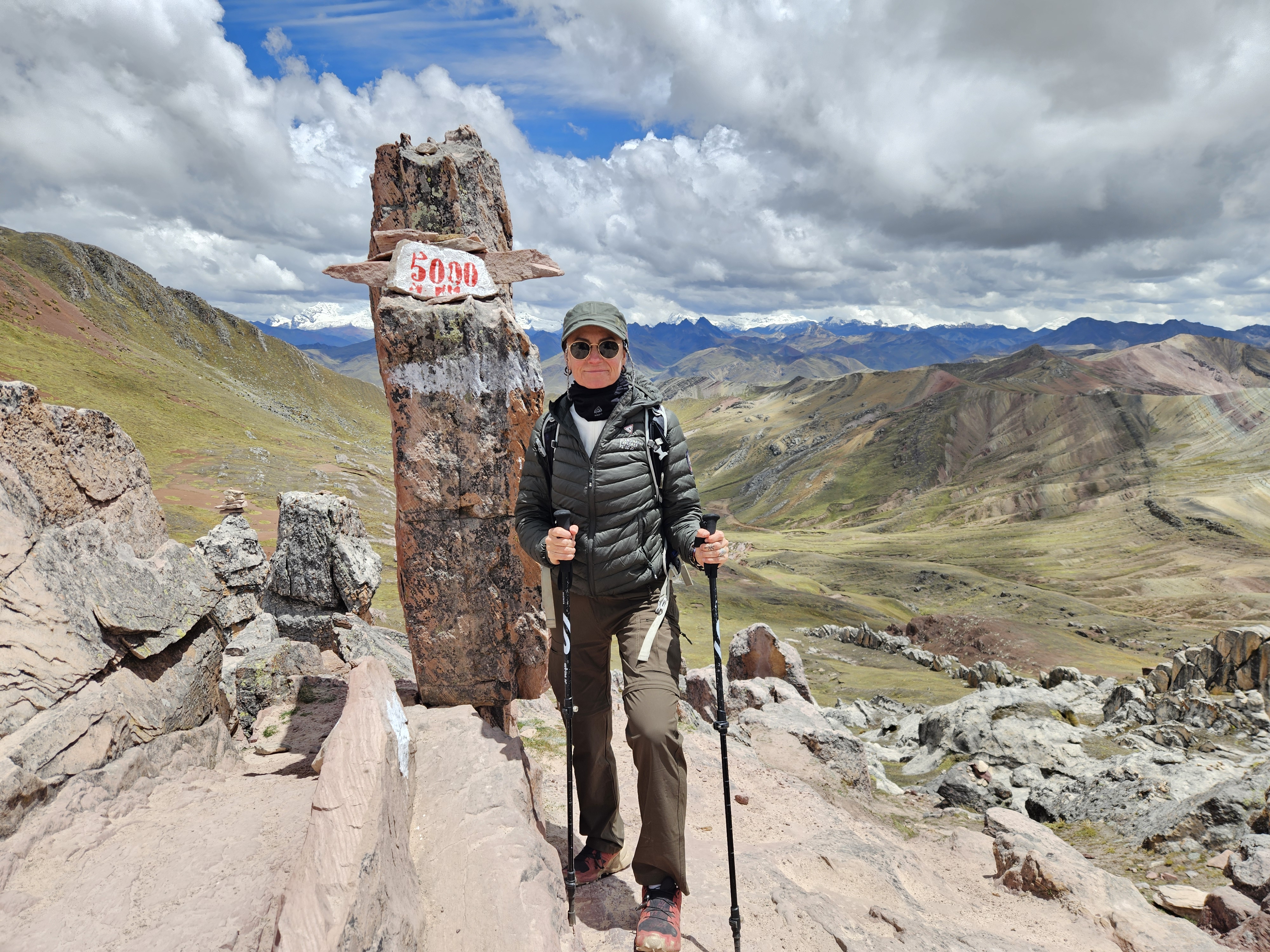
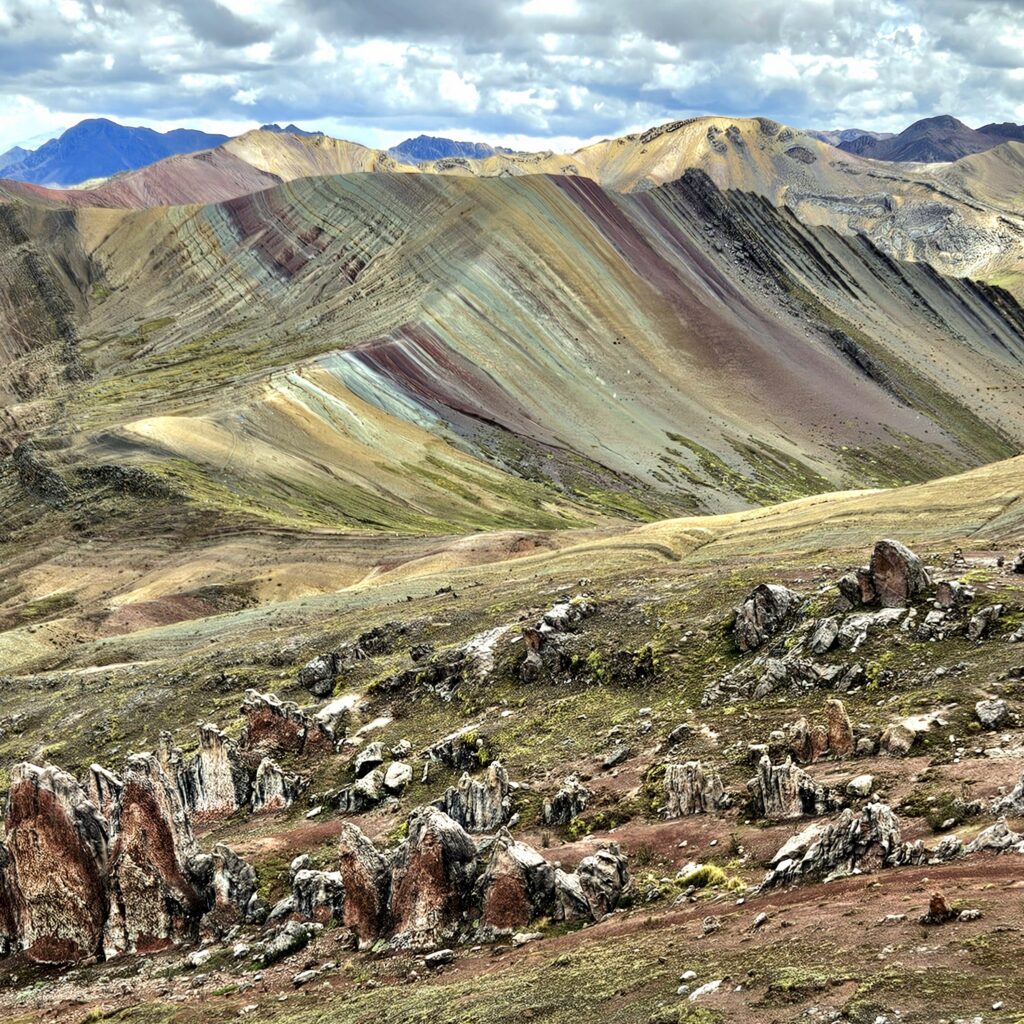
Before my trip, I was worried about the altitude because I’ve had altitude sickness in the Himalayas. But in Peru, I managed surprisingly well — even when we reached the Stone Forest at 5,000 meters. I absolutely believe that taking enough time to acclimatize in Cusco and drinking coca and muña (mint) tea every day made all the difference.
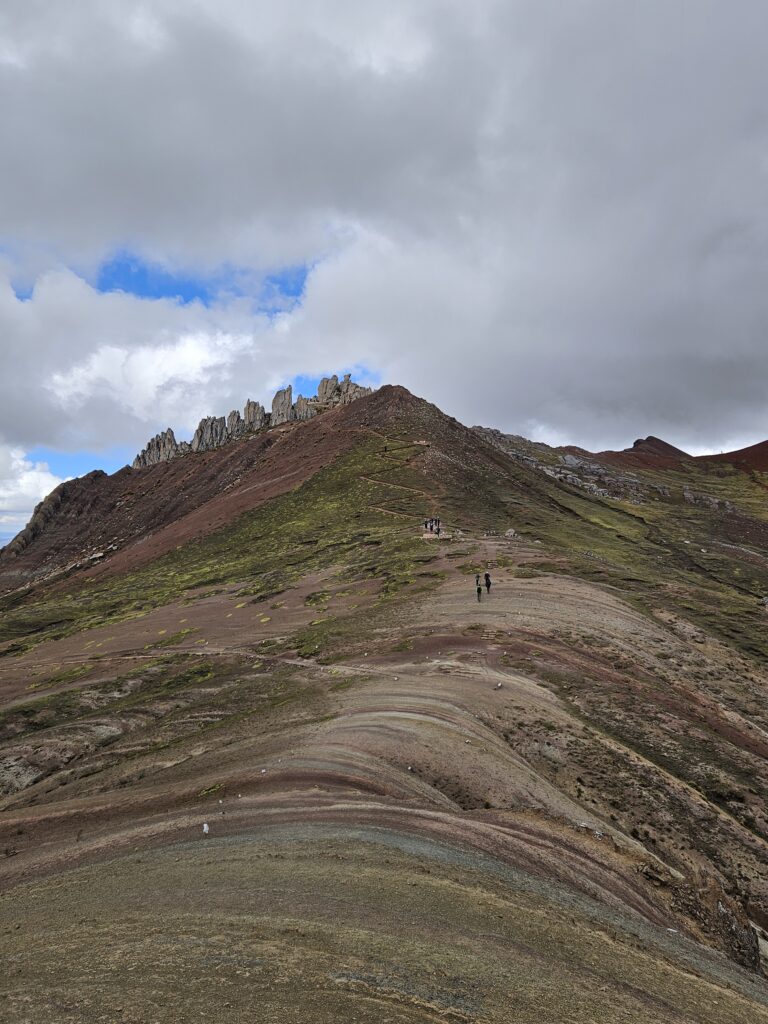
The trail at Palccoyo is relatively easy, more like a scenic walk, and we spent about 2 hours exploring. Still, at this altitude, you have to walk very slowly. Even mild uphill sections make your heartbeat explode. But moving gently and taking breaks allowed me to enjoy every moment of the views.
What makes Palccoyo special
- Very few tourists compared to Vinicunca
- Altitude: 4900 m
- Elevation gain 104 m or 175 m to Stone Forest
- Difficulty: Moderate because of the altitude
- Hiking time: 2 hrs
- Optional extension to the Stone Forest 5,000 m
- Gorgeous views without the crowds
Pallay Punchu (The Sharp Mountain)
(My personal experience)
Pallay Punchu might be the most dramatic of all three. Its sharp, blade-like rainbow ridges look like something from another planet.
But unlike Vinicunca and Palccoyo, tour companies in Cusco do NOT organize regular tours here.
To visit Pallay Punchu, I had to hire a private taxi from Cusco.
It was a long drive, but honestly, I didn’t mind. I watched some of my favourite Netflix documentaries about Peru along the way, and the road passes through quiet villages and untouched landscapes. The journey felt like an adventure in itself.
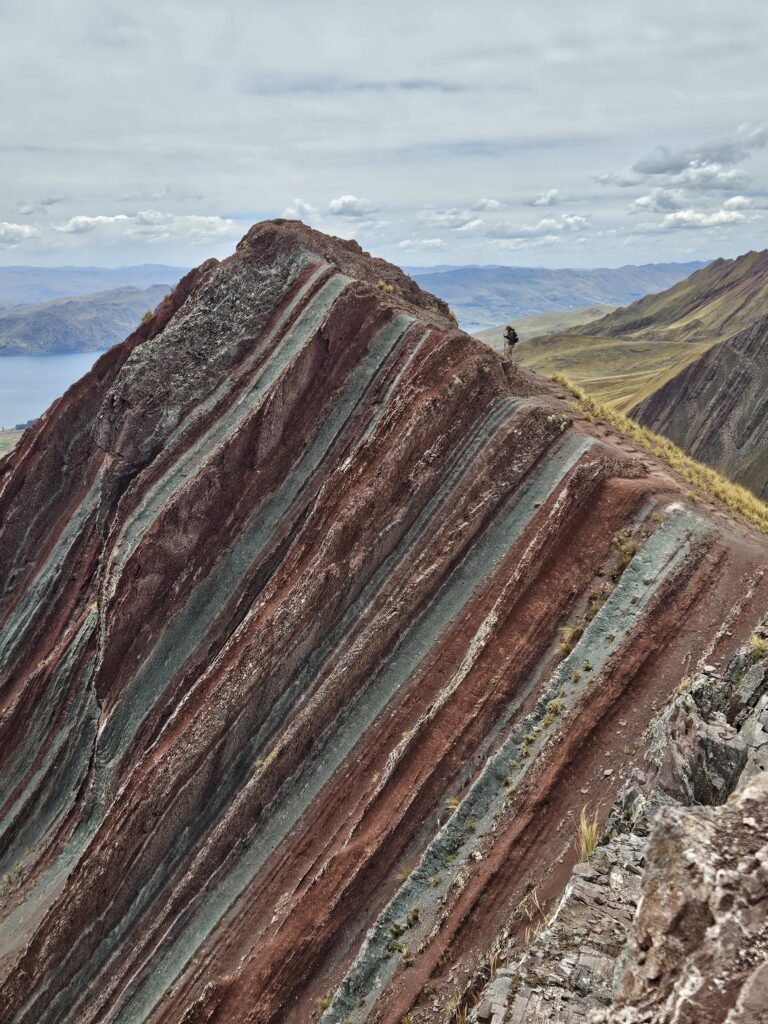
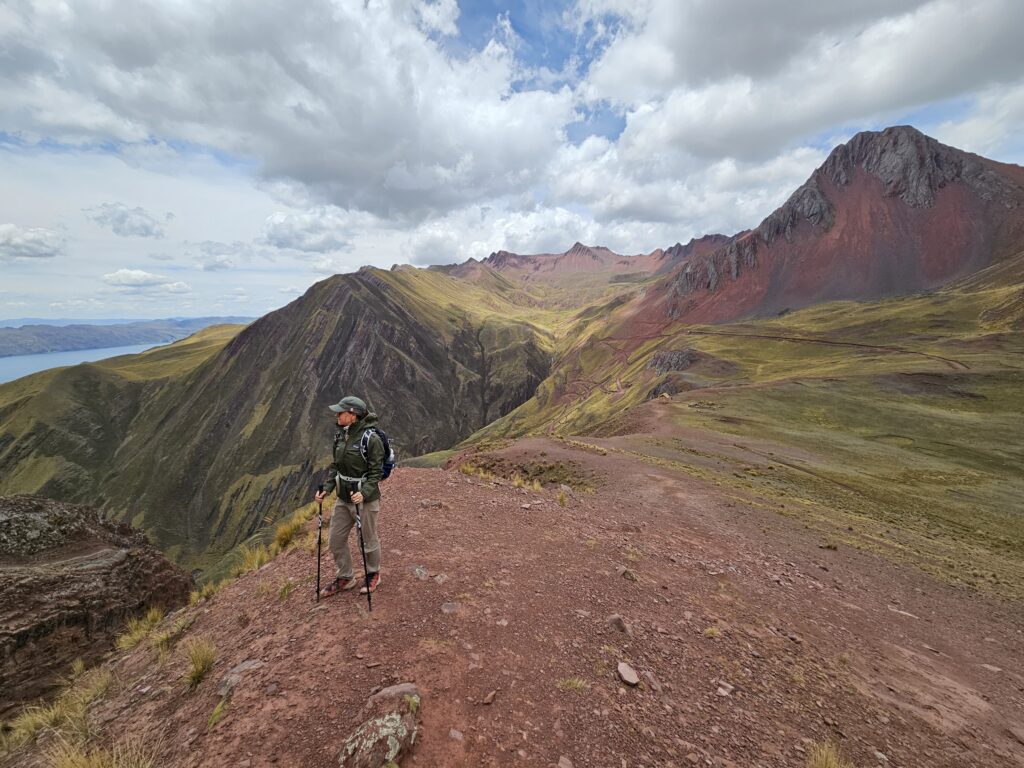
When we arrived, it was just my taxi driver and me.
- no tourist groups
- no souvenir sellers
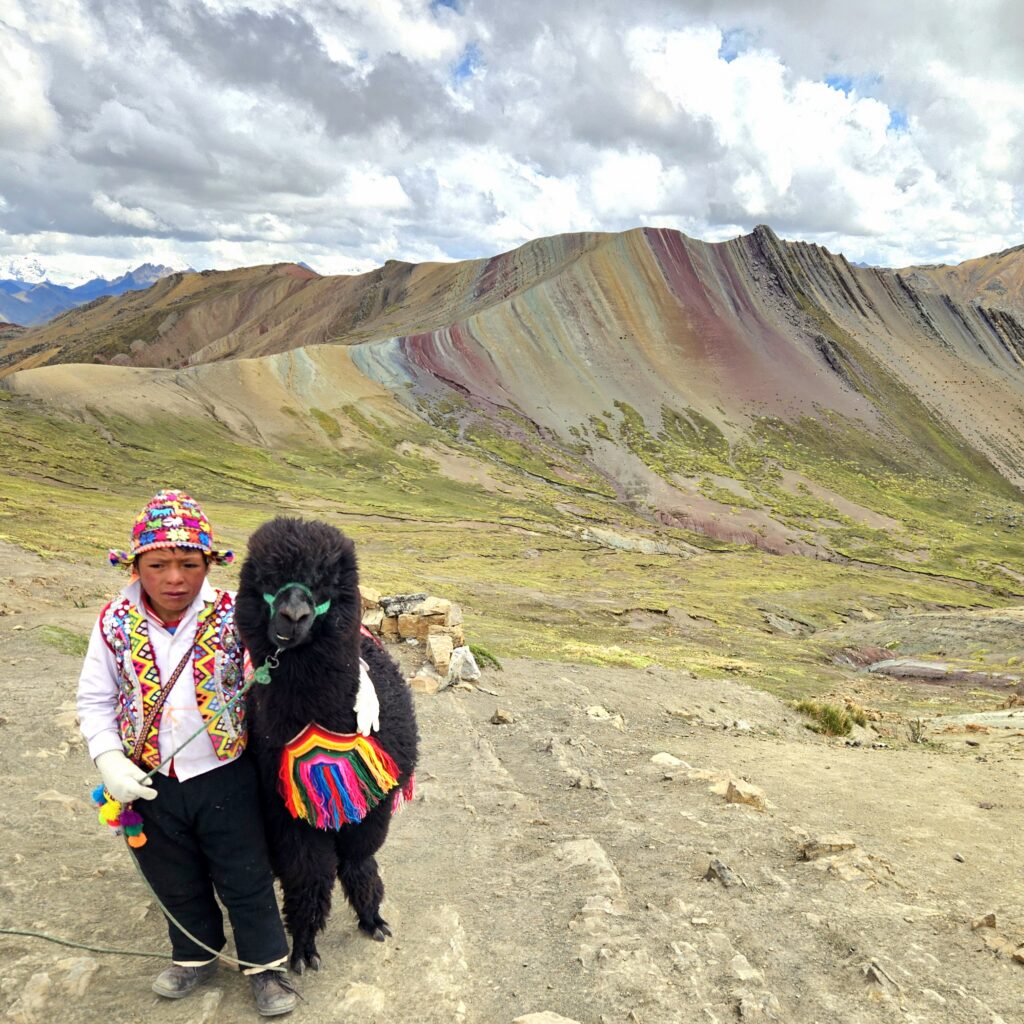
- no colourful lamas in costumes
- no crowds
Nothing. Only silence, wind, and the sharp rainbow ridges rising in front of me.
The trail is narrow and steep, and I personally love that kind of path. It felt wild, untouched, and authentic.
So which one should you choose?
Vinicunca – Rainbow Mountain
✔ Most famous
✔ Stunning colours
✘ Very crowded
✘ Hardest climb
Palccoyo – Alternative Rainbow Mountain
✔ Easiest
✔ Least crowded (of the accessible ones)
✔ Multiple rainbow viewpoints
✔ Great for anyone with mild altitude concerns (with acclimatization)
Pallay Punchu – Sharp Mountain
✔ Wild, remote, no people
✔ Perfect for adventure lovers
✘ Requires private transport
✘ Steep trail
My Final Thoughts
If you want the classic Instagram shot—go to Vinicunca.
If you want a peaceful, beautiful, and manageable rainbow mountain, choose Palccoyo.
If you crave solitude and steep ridges—head to Pallay Punchu.
For me, Palccoyo and Pallay Punchu were the highlights of my trip.
Not because they were the most famous, but because they offered quiet, powerful moments in nature—the kind that stay with you long after the hike ends.
Join my Hiking & Yoga Retreat in Peru in 2027 and let me take you to Machu Picchu and Palccoyo! Click here to read more about the retreat.
Bhutan, known as the "Land of the Thunder Dragon," is one of the world’s most unique and enchanting destinations. Nestled in the eastern Himalayas between India and China, this small kingdom is renowned for its untouched landscapes, rich spiritual heritage, and a solid commitment to preserving its natural environment. Bhutan’s "Gross National Happiness" philosophy of GDP offers travelers a rare glimpse into a society that prioritizes well-being, sustainability, and cultural preservation.
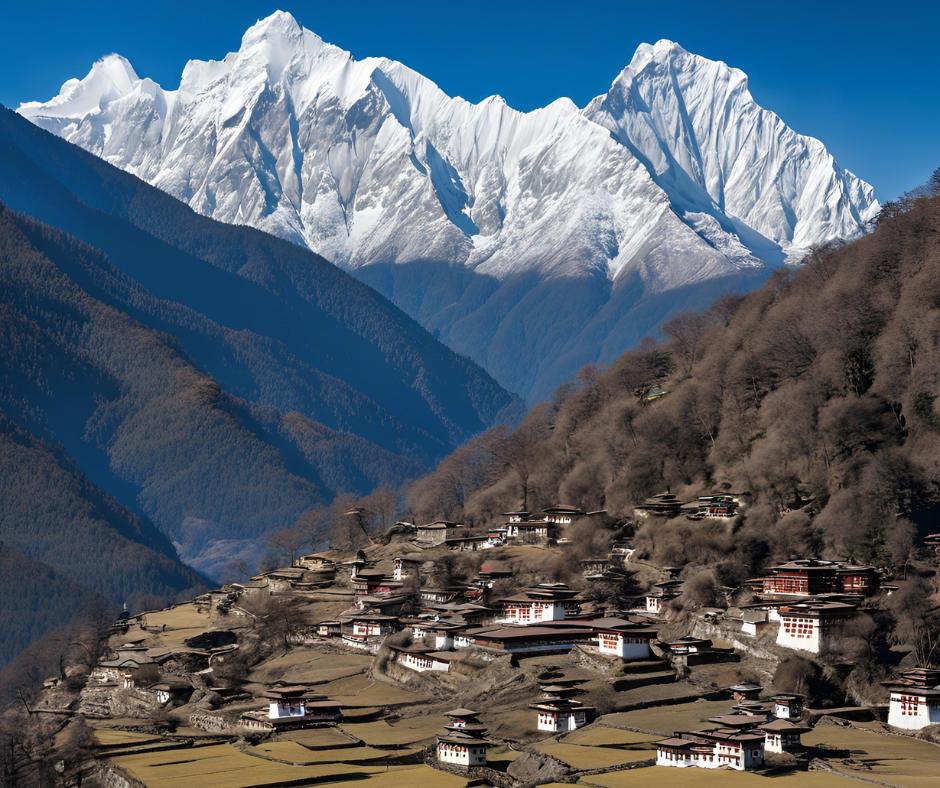
If you’re seeking an adventure that combines trekking, yoga, and a deep dive into local culture, Bhutan is the ideal destination. This remarkable country should be at the top of your travel list, so our Trekking and Yoga Retreat in Bhutan is the perfect way to experience it.
Why Bhutan?
1. High Value, Low Impact Tourism
Bhutan opened its doors to international tourism in 1974, but the country has always taken a cautious approach. Its guiding philosophy of "high value, low impact" tourism ensures that the environment, culture, and way of life remain largely unspoiled. This also means visitors experience Bhutan authentically and meaningfully, free from crowds and commercialism.
Since reopening its borders in 2022, Bhutan has continued its commitment to sustainable tourism, which makes it a more exclusive and less touristic destination. While it may be more expensive than other destinations, the investment is worth it for your once-in-a-lifetime experience.
The Unique and Fascinating Facts About Bhutan: What Makes Bhutan So Special
Cross-National Happiness: A Unique Development Measure
Perhaps Bhutan's most distinctive aspect is its dedication to Gross National Happiness (GNH) over Gross Domestic Product (GDP). Introduced by Bhutan’s fourth king, King Jigme Singye Wangchuck, GNH is a holistic approach to development that emphasizes the well-being of its people over material wealth. GNH is based on four pillars: sustainable development, environmental conservation, cultural preservation, and good governance. Bhutan's focus on happiness has gained international recognition as a model for sustainable development.
Bhutan is one of only three world's carbon-negative countries in the world
Bhutan is one of the world’s carbon-negative countries, meaning it absorbs more carbon dioxide than it emits. Over 70% of Bhutan is covered by forests, which helps offset the nation's carbon emissions. Furthermore, Bhutan’s constitution mandates that at least 60% of its land remain under forest cover. The country relies heavily on hydropower, reducing its dependence on fossil fuels.
A ban on plastic Bags and Tobacco
Before many other nations took environmental concerns seriously, Bhutan banned plastic bags in 1999, showcasing its commitment to ecological preservation. In addition, Bhutan is the only country in the world where the sale and production of tobacco are illegal. While smoking in private is not banned, it is unlawful to sell or cultivate tobacco products. This regulation aligns with Bhutan’s spiritual and cultural values, emphasizing health and mindfulness.
A Deep Respect for Buddhism
Bhutan is a deeply spiritual country, and Vajrayana Buddhism is the official religion. Bhutanese culture and daily life are deeply intertwined with Buddhist philosophy. Monasteries, prayer flags, and stupas dot the landscape, and many Bhutanese people live close to these sacred sites. Je Khenpo, the head of the Bhutanese monastic body, also advises the country's leaders, ensuring that spirituality plays a role in governance.
Thimphu: The Only Capital Without Traffic Lights
In a world where bustling cities are often defined by their chaotic traffic, Bhutan’s capital, Thimphu, is unique for its lack of traffic lights. Instead of automated signals, police officers direct traffic at key intersections. When traffic lights were installed briefly, residents preferred the traditional human touch, and the lights were swiftly removed. This speaks to Bhutan’s emphasis on tradition over modernity.
Traditional Dress as a National Identity
Bhutanese people take great pride in their traditional clothing, which is worn daily. Men wear the "go," a knee-length robe, while women wear the "Kira," an ankle-length dress. Traditional attire is mandatory in public institutions, schools, and official gatherings. This practice has helped preserve Bhutan’s rich cultural heritage amidst globalization.
Preserving the Dzong Architecture
Dzongs, or fortress monasteries, are a distinctive feature of Bhutanese architecture and serve as religious and administrative centers. Each district in Bhutan has its dzong, an essential symbol of its cultural and spiritual heritage. These massive structures, built without nails, are an integral part of Bhutanese identity and often host colorful festivals known as "tsechus," where locals gather for traditional dances and rituals.
2. Trekking in Breathtaking Landscapes
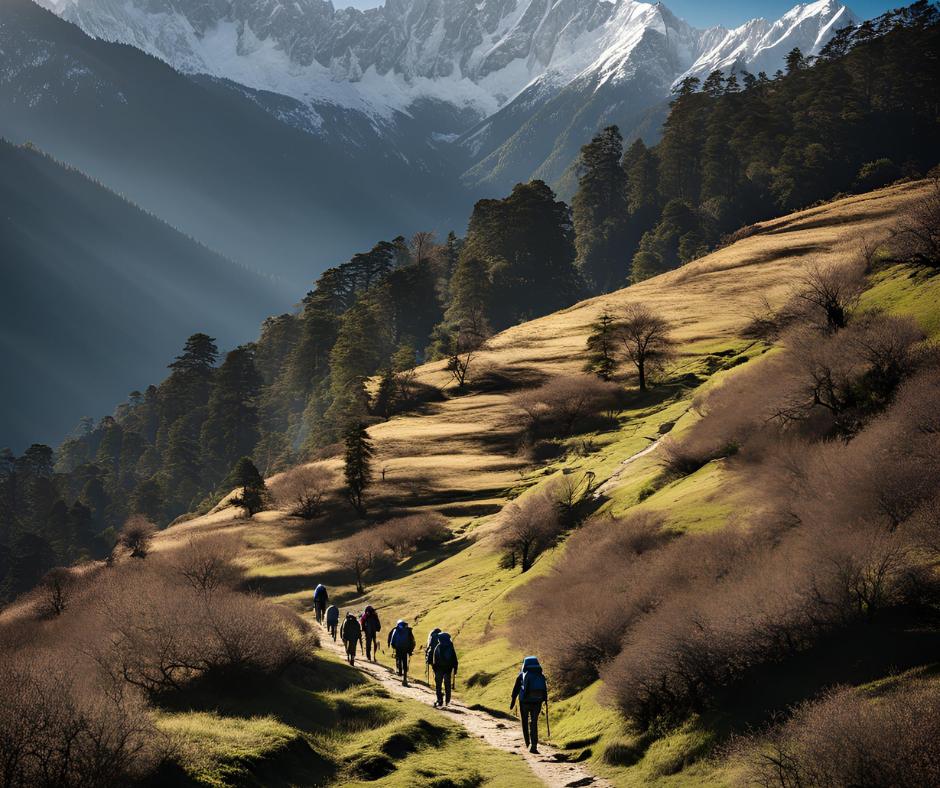
Bhutan is a hiker’s paradise, with its rugged mountains, lush valleys, and pristine forests. Our retreat includes Bhutan’s most iconic trek, the Dagala Thousand Lakes Trek. This 5-day journey takes you through alpine meadows, serene lakes, and panoramic views of the world’s highest peaks, including Mount Everest. You’ll trek through remote villages, see yak herders in their natural environment, and experience the tranquil beauty of Bhutan’s wilderness.
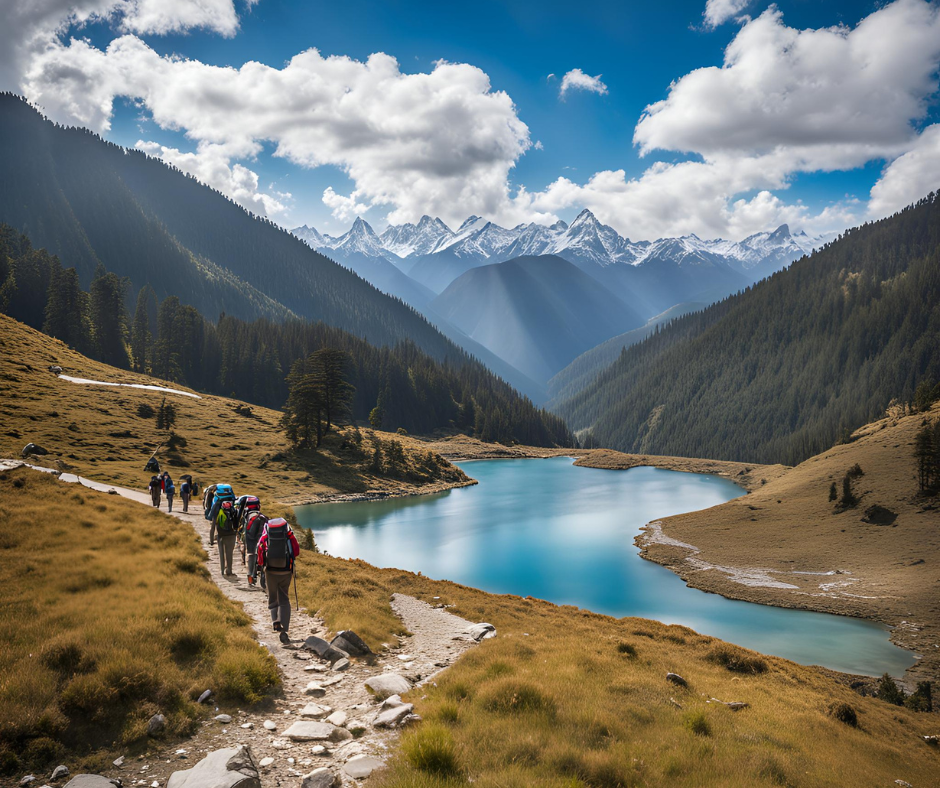
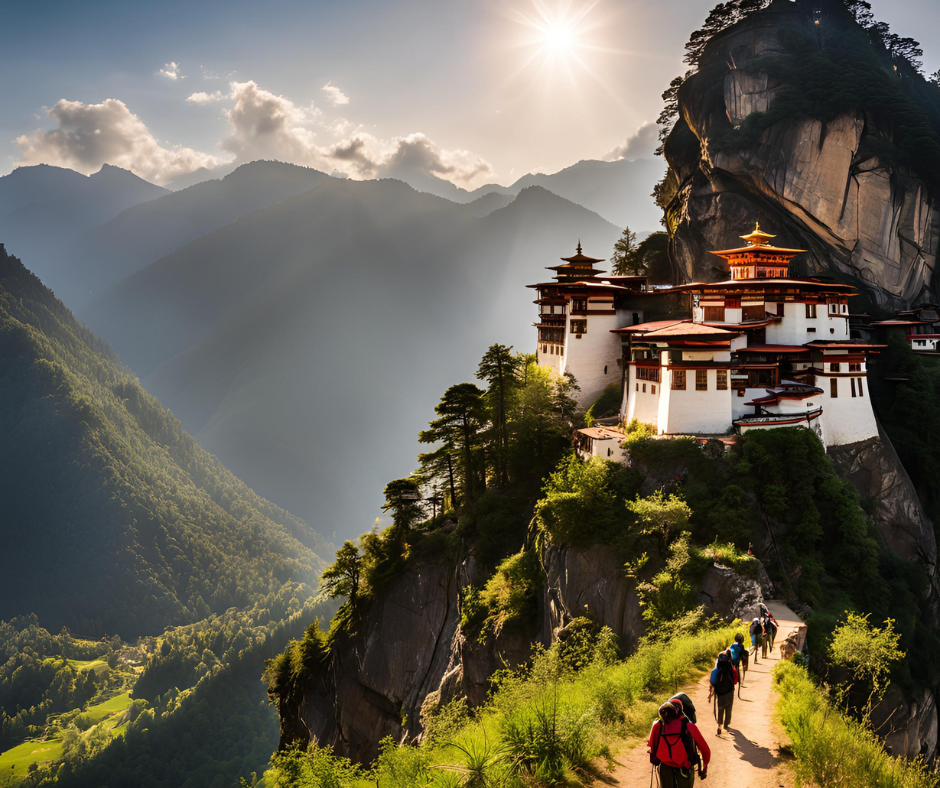
Another highlight is the trek to the famous Tiger’s Nest Monastery, perched dramatically on the edge of a cliff at 3,120 meters. This sacred site is one of the most spiritual places in the world, and hiking to it is an enriching experience for both mind and body.
3. Yoga and Meditation with Monks
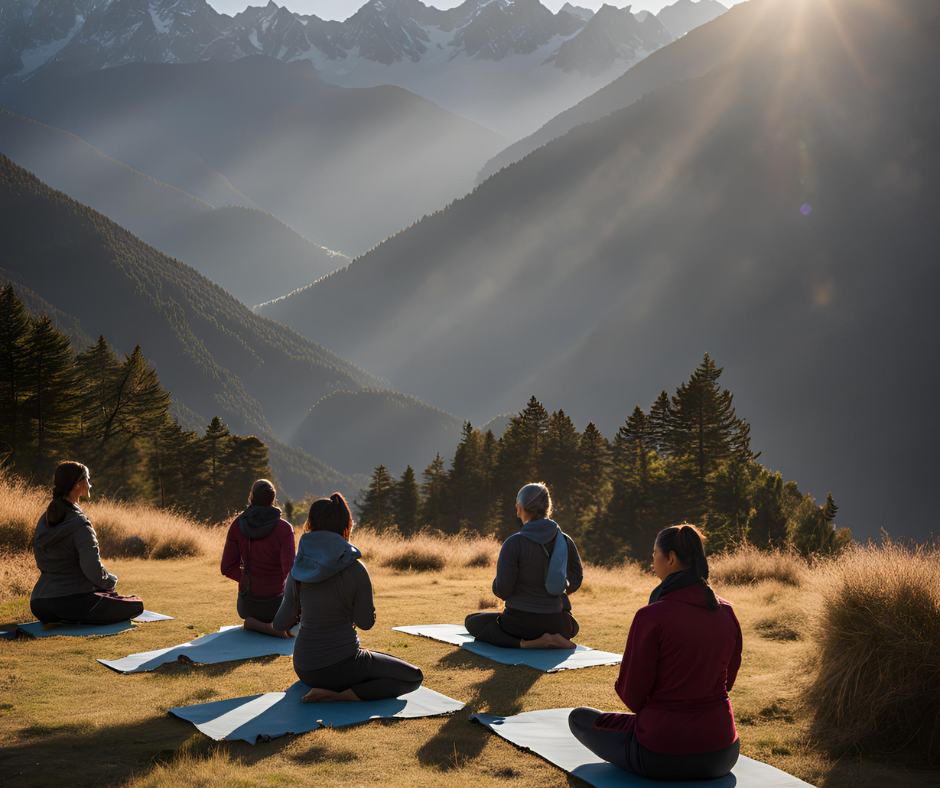
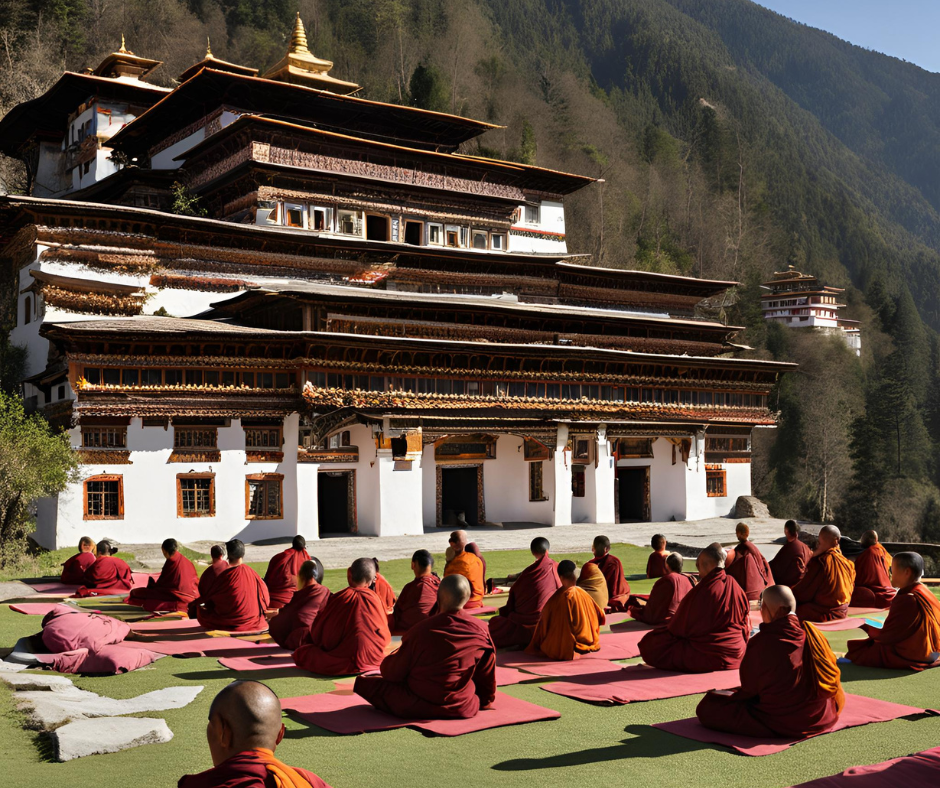
What makes our Bhutan retreat truly special is the combination of trekking with daily yoga and meditation sessions. We’ll practice yoga in nature each day, helping you balance your energy and stay grounded during the trek. Bhutan’s spiritual heritage is deeply intertwined with Buddhism, and during our retreat, you’ll also have the opportunity to meditate alongside monks in peaceful temples. This immersive experience allows you to connect with the country’s spiritual essence.
4. Cultural Immersion and Spiritual Connection
Bhutan is where tradition and spirituality are woven into the fabric of daily life. On this retreat, you’ll explore Bhutan's rich culture and history, visiting ancient temples, fortresses, and monasteries. From the moment you step foot in Paro, where our retreat begins, to the bustling streets of Thimphu, Bhutan’s capital, you’ll feel the warmth and hospitality of the Bhutanese people.
What to Expect from Our Bhutan Trekking and Yoga Retreat
Our Yoga and Trekking Retreat in Bhutan is designed for adventurous people seeking physical challenges and spiritual growth. Here’s a snapshot of what you can expect:
- Start in Paro: We begin in the picturesque town of Paro, where you’ll have time to acclimatize, explore temples, and prepare for the adventure ahead.
- Trek to Tiger’s Nest: We’ll hike to the iconic Tiger’s Nest Monastery, a highlight of the retreat and one of the most awe-inspiring experiences in Bhutan.
- Dagala Thousand Lakes Trek: This 5-day trek through the breathtaking Himalayas offers physical challenges and moments of serenity as we journey through alpine lakes and valleys.
- Daily Yoga and Meditation: Each day of the retreat includes yoga sessions designed to complement our trekking and meditation in sacred spaces like monasteries.
- Cultural Exploration: Along the way, we’ll visit local villages, learn about Bhutan’s deep-rooted Buddhist traditions, and experience the authentic Bhutanese way of life.
- End in Thimphu: Our retreat concludes in Bhutan’s capital city, Thimphu, where you can relax, explore, and reflect on the journey.
Why Travel to Bhutan with Us?
Our small and intimate retreat group ensures personalized attention and a deeper connection with your surroundings.
By joining our retreat, you’ll also have access to knowledgeable local guides who will provide insight into Bhutan’s history, culture, and traditions, making your experience even more decadent.
Ready to Embark on the Journey of a Lifetime?
If you’re looking for a retreat that combines adventure, mindfulness, and cultural immersion, Bhutan is calling you. Our Yoga and Trekking Retreat is open for bookings, but spots are limited.
Don’t miss this once-in-a-lifetime opportunity to explore one of the world’s most magical destinations.
Sign up now to reserve your spot!