Yoga for Mountain Hiking That Supports Every Step
The steepest part of a hike often comes when your legs are already tired, your pack feels heavier, and the trail demands one more careful step. Yoga for mountain hiking isn't about performing advanced poses at a summit. It is a practical way to prepare your body and attention for uneven ground, long climbs, descents, and well-earned recovery.
For many hikers, especially those returning to the mountains after a busy season at work or home, yoga offers something valuable: a chance to build awareness alongside fitness. You learn to notice how you stand, breathe, stabilize, and respond to fatigue. Those small skills can make a day on the trail feel more confident and more enjoyable.
Here is a 20-minute yoga flow video for hikers on YouTube.
Why Yoga Helps on Mountain Trails
Hiking asks more from the body than a flat walk. Uphill sections challenge your calves, hips, glutes, and cardiovascular endurance. Descents require control through the thighs and ankles. Rocky trails ask your feet and core to make constant small adjustments, while a backpack changes how your shoulders and spine carry weight.
A thoughtful yoga practice can support these patterns through mobility, balance, strength, and recovery. It will not replace hiking, strength training, or sensible preparation for a demanding route. If you are planning long days, significant elevation gain, or carrying a heavy pack, time on your feet remains essential. Yoga works best as a complement - helping you move well while you build the specific endurance a mountain day requires.
It can also create a useful pause. Hiking has its own rhythm, but it is easy to rush, hold your breath on a climb, or push past the signals that it is time for water, food, or a slower pace. Breath-led movement teaches you to check in before discomfort becomes frustration.
The Areas Hikers Often Need Most
You do not need a long sequence every day. A regular 15- to 25-minute practice can be more useful than an ambitious session done once a month. Focus on the places that commonly feel tight, weak, or overworked after hiking.
Here is a short 10-minute YouTube video you can use for the morning stretch and to wake up your body.
Hips and ankles for a steadier stride
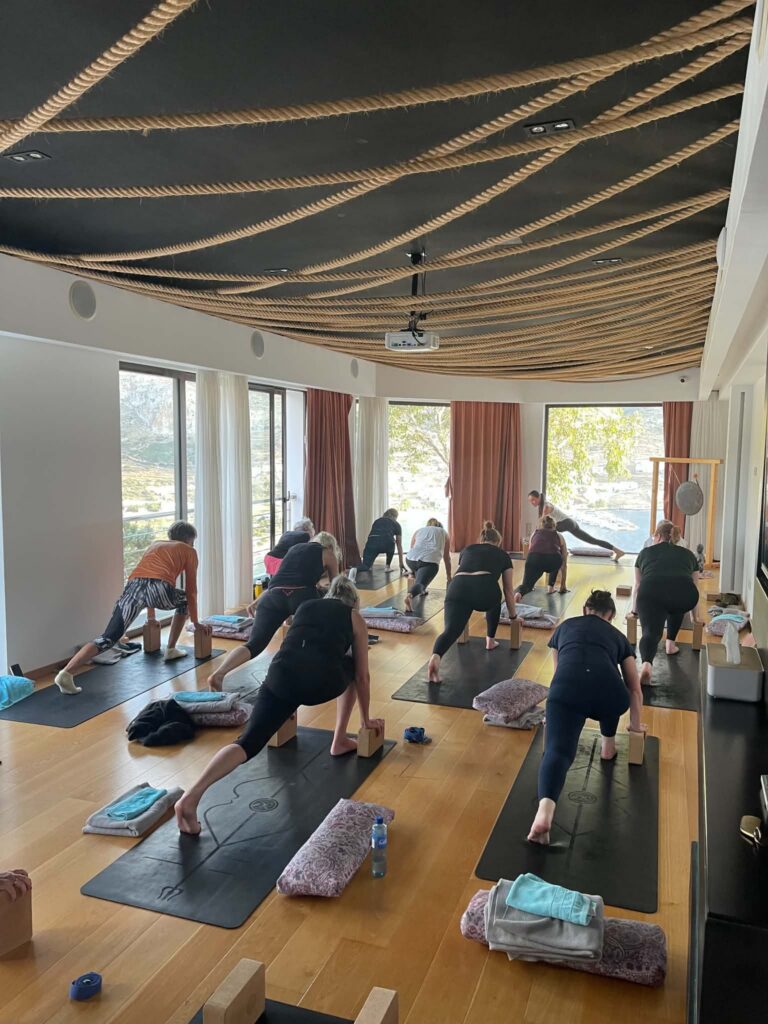
Hips need both range of motion and strength to support a comfortable stride uphill. Gentle lunges, low squats, and slow transitions between positions can help you explore hip movement without forcing a deep stretch. Keep your front knee tracking in line with your toes, and use blocks, a chair, or a wall when that gives you better control.
Your ankles do a surprising amount of work on a rough trail. Calf raises, slow heel-lowering movements, and standing balance poses can help you develop awareness of your feet and lower legs. In yoga, a simple mountain pose becomes useful when you pay attention to how weight moves across both feet. Are you gripping with your toes? Collapsing inward? Leaning more heavily into one side? You don't need to judge the answer. Simply noticing it gives you information to work with.
Legs and core for climbs and descents
The strength needed for hiking is often quiet and sustained. You are not trying to hold a dramatic pose. You are preparing to take thousands of controlled steps.
Chair pose, warrior variations, bridge pose, and slow lunges can build useful strength through the glutes, thighs, and trunk. The key is not how low you go. Choose a range where you can breathe steadily and maintain alignment. On the descent, this same control helps your legs absorb repeated impact rather than collapsing with each step.
Core work matters, but it doesn't have to mean endless crunches. Practices that ask you to stabilize while moving, such as bird dog, plank variations with knees down, or a slow transition from standing to a lunge, are often more relevant to hiking. They encourage the torso to stay supported while the limbs work independently, much like walking over variable terrain.
Shoulders and upper back for carrying a pack
A daypack can make the neck and shoulders feel surprisingly tense, particularly when you are tired or using trekking poles. Gentle chest-opening poses, supported twists, and shoulder mobility work can counter the rounded posture many of us bring from daily life.
Approach this area with patience. More flexibility is not always the answer. Often, hikers benefit from learning how to keep the ribs relaxed, the shoulder blades supported, and the jaw soft. A lighter grip on your poles and a better-fitting pack may matter as much as stretching.
A Simple Yoga Routine Before a Hike
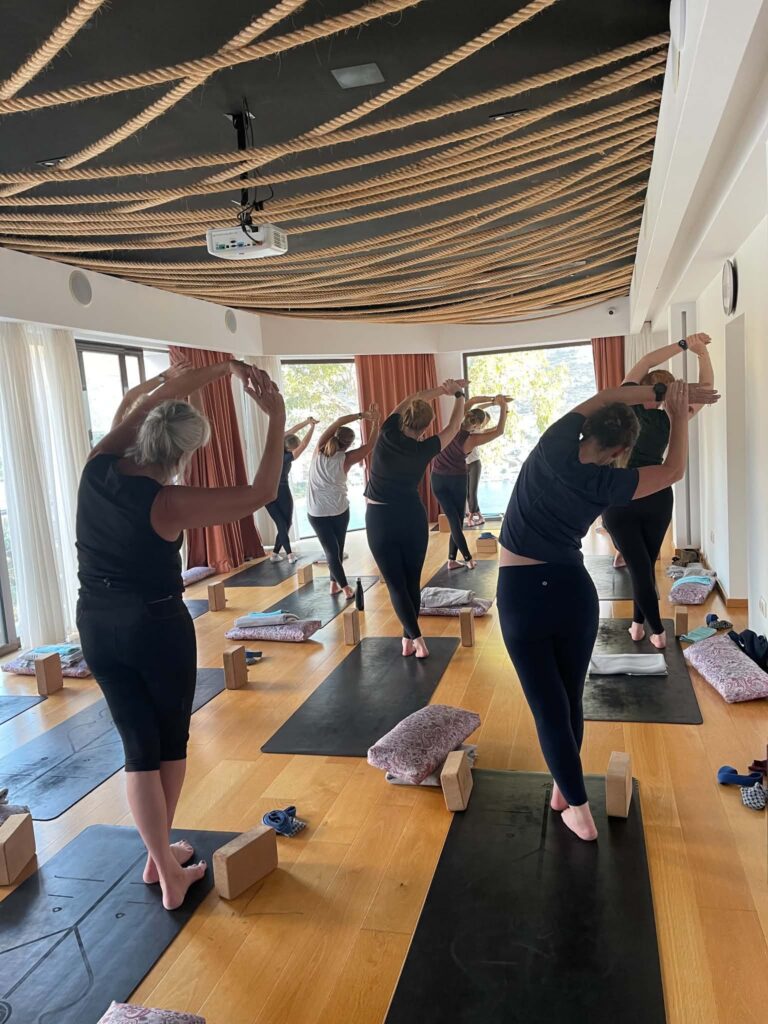
The evening before a hike is not the time for an intense practice that leaves your legs sore. Choose calm, steady movements that help you feel connected to your body. Spend a few breaths in mountain pose, then move through gentle cat-cow movements, low lunges, supported squats, and easy standing balance.
Finish with a few minutes lying down with your legs supported on a chair, or seated with a comfortable upright spine. Let your breath lengthen naturally rather than forcing a technique. The goal is to arrive at the trail rested and attentive, not to achieve a perfect pose.
On the morning of a hike, keep it even simpler. A few ankle circles, shoulder rolls, hip movements, and slow forward folds with bent knees can help you wake up. If the day starts cold, take a little extra time to warm up before tackling a steep climb.
Yoga for Mountain Hiking During a Trek
Yoga on a hiking day doesn't require a mat, special clothing, or a scenic photo moment. It can be as simple as standing tall during a break, relaxing your hands, rolling your shoulders, and taking three unhurried breaths.
On a long ascent, notice whether you are holding your breath. A steady, comfortable rhythm can help you pace yourself. If conversation becomes difficult, that may be a sign to slow down. On uneven terrain, focus on the next few steps instead of worrying about how much trail remains.
At a rest stop, a gentle calf stretch against a rock, a supported lunge, or a few arm circles may feel good. Avoid long, deep stretches when your muscles are cold or fatigued. Keep movements easy and stable, and save a fuller practice for later.
Mindfulness is useful here in a very practical sense. It means seeing the wet root, feeling the changing weather, drinking before you are thirsty, and choosing a pace that allows you to enjoy the landscape. Mountains invite presence, but they also require it.
Recovery After a Long Day
After hiking, your body usually needs food, fluids, warmth, and rest before it needs a challenging yoga class. Once you have settled in, a gentle recovery practice can be a lovely way to unwind.
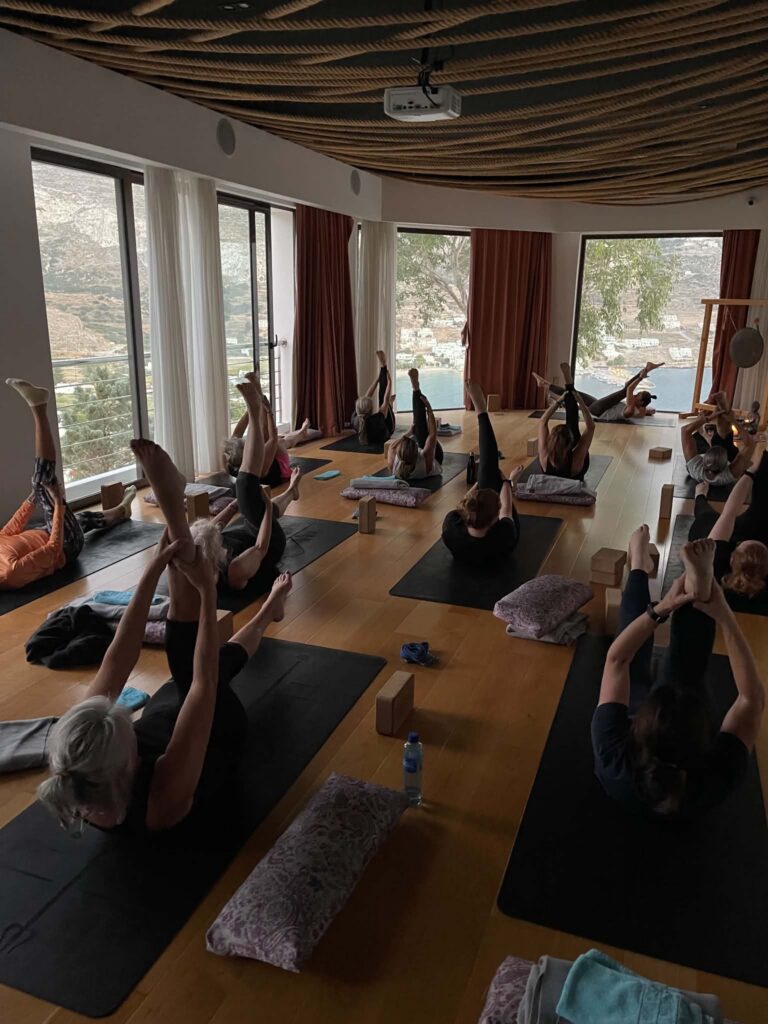
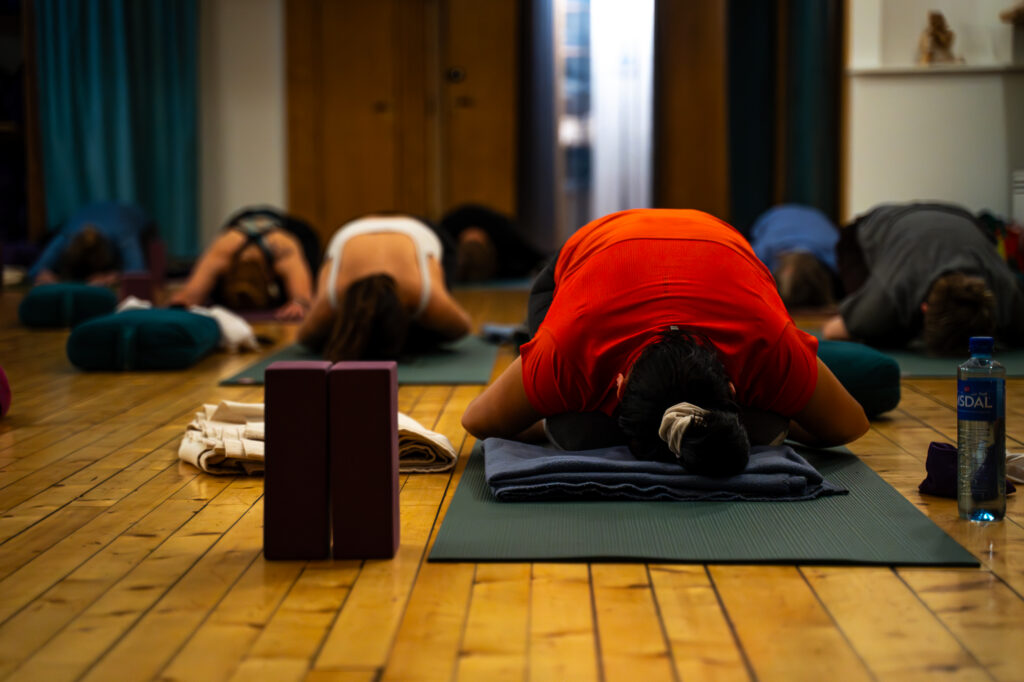
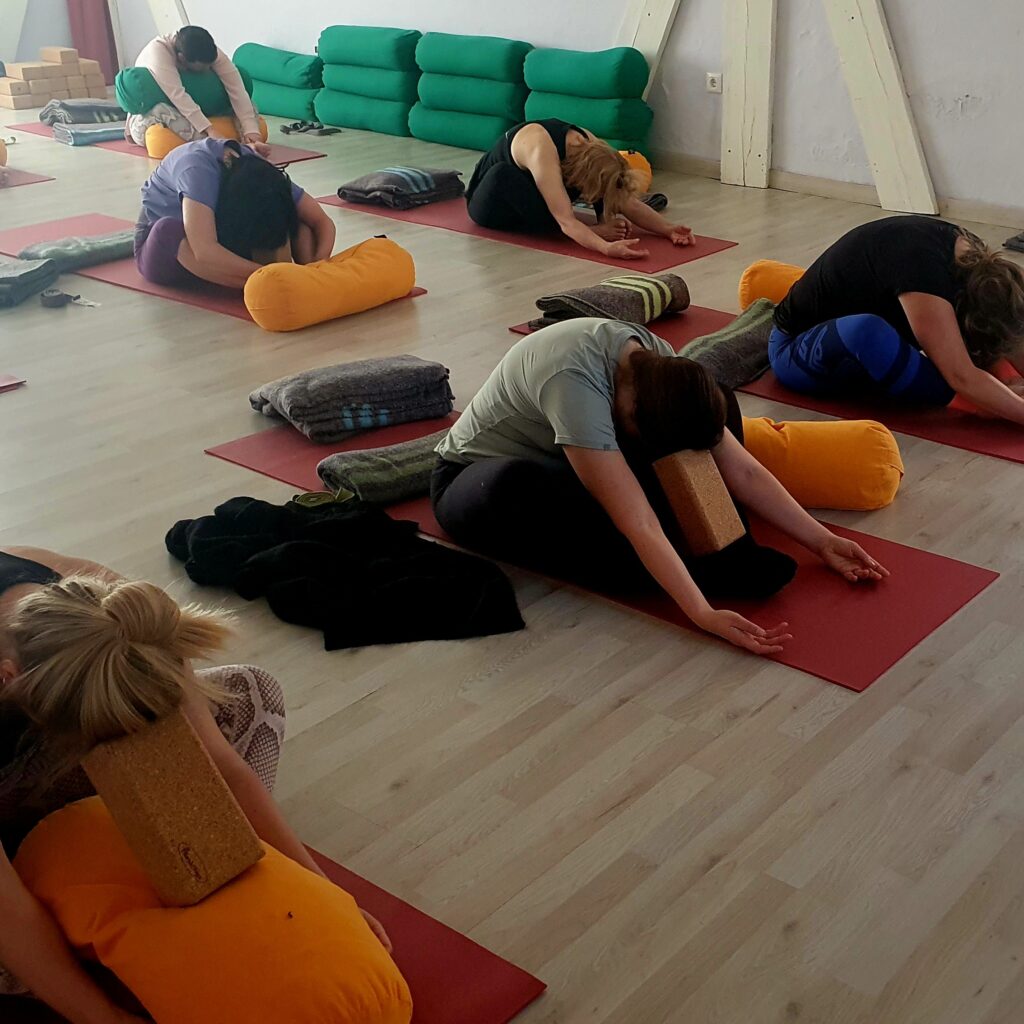
Try a supported child’s pose, a reclined figure-four stretch, a comfortable twist, or legs elevated on a chair. Keep the breath quiet and let the practice be restorative rather than demanding. If an area feels sharp, swollen, or painful, skip the stretch and give it the attention it needs rather than trying to work through it.
Sleep is part of recovery too. On active travel days, an early night may do more for tomorrow’s hike than adding another activity. This is one of the beautiful balances of a yoga and hiking retreat: the satisfaction of physical challenge alongside permission to slow down afterward.
Make the Practice Fit Your Hiking Life
The best practice is the one you will actually return to. If you are new to yoga, begin with simple movements and use support freely. If you are already active, resist the temptation to make every session intense. A strong practice should leave you feeling more capable, not depleted.
Your needs will also change with the terrain. A gentle coastal walk may call for little more than mobility and balance. Multi-day mountain hiking may benefit from more focused leg strength, pack practice, and recovery time. Weather, altitude, route length, and your previous hiking experience all matter.
At MITT Yoga, we combine yoga and hiking not to make the mountains easier or remove their challenge. We do it to meet that challenge with a body that feels prepared, a breath that stays available, and enough awareness to enjoy where you are. Before your next trail day, take a few quiet minutes to move, breathe, and feel your feet on the ground. That simple preparation can carry you far.
Related Posts