Peru Yoga and Hiking Retreat: Why I Choose To Return in 2027 to Willka T’ika in the Sacred Valley
Some places stay with you long after you leave. For me, Willka T’ika in Peru is one of them. After leading my first yoga and hiking retreat there in November 2025, I knew I wanted to return. I booked another retreat for November 2027 before I had even finished telling people about the first one.
The world has many beautiful places, and since I started organizing yoga and hiking retreats in 2017, I have been fortunate to visit quite a few of them. But every now and then, I find a place that feels different. A place where the setting, the people, the culture, and the atmosphere come together in a way that makes me want to return.
Willka T’ika, in Peru’s Sacred Valley, is one of those places.
My first retreat there took place in November 2025. It combined yoga, hiking, ancient Inca sites, local traditions, and time to simply enjoy being in the Andes. We explored the Sacred Valley, visited Machu Picchu, shared meals, practiced yoga, and discovered landscapes that were new to many of us.
The experience confirmed what I hoped when I planned the trip: Peru isn't just a destination for experienced hikers or dedicated yoga practitioners. It is a place where people with different backgrounds, interests, and experience levels can share an extraordinary adventure.
And I wanted to do it again.

How I Found Willka T’ika
Finding the right retreat center is one of the most important parts of organizing a retreat abroad. The atmosphere, the people who run the place, the food, the accommodation, and the opportunities to experience the local culture all matter very much.
When I was researching places for my Peru yoga and hiking retreat, I started asking people who knew the country and had experience with different retreat centers.
Several people recommended Willka T’ika. When I contacted them to ask about availability, their answer reminded me of something I have learned while organizing retreats in different parts of the world: places that offer something genuinely special are often booked well in advance.
I was able to reserve my dates for a future retreat by paying the deposit immediately, even though the stay was still two years away.
That is how it works with places that have built a strong reputation over many years. They do not necessarily have a free room whenever you decide you would like to visit. People return, retreat leaders return, and the most sought-after dates fill up.
I understand why.
After experiencing Willka T’ika myself, I did not hesitate to book it again.


Willka T’ika: A Wellness Retreat with a History
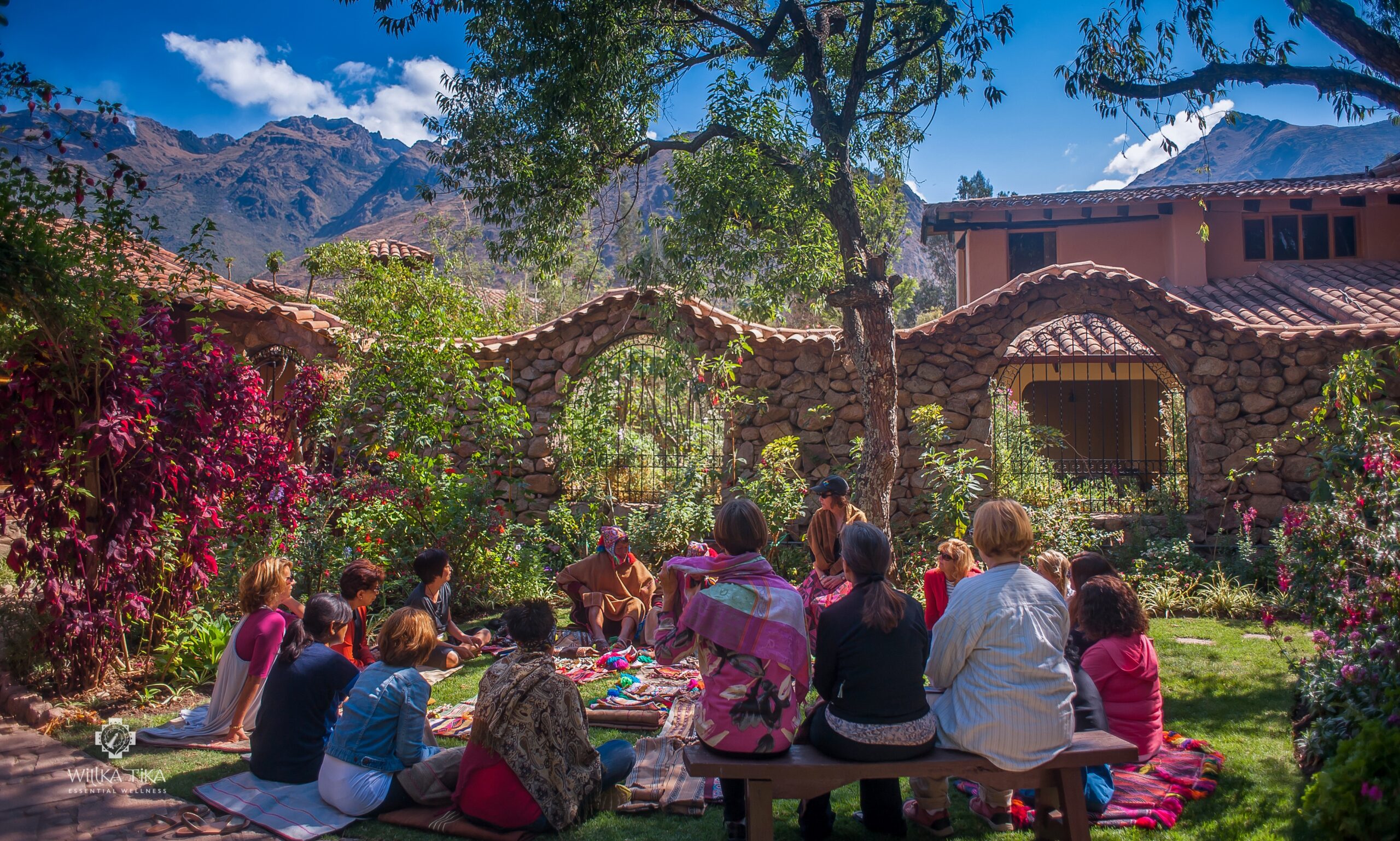
Willka T’ika sits near Urubamba in Peru’s Sacred Valley, surrounded by the dramatic landscapes of the Andes. Carol Cumes founded the retreat center in the mid-1990s, when wellness tourism was far less developed than it is today.
Carol had long been drawn to Peru and its Andean culture. She envisioned a place where visitors could experience holistic wellbeing while respecting the traditions, knowledge, and way of life of the local Quechua people.

The name Willka T’ika is commonly translated as “sacred flower” in Quechua.
Over the years, the center has developed into a distinctive destination for yoga retreats, meditation, cultural experiences, and restorative stays. It was among the earliest yoga and wellness retreat centers in the Sacred Valley, long before yoga retreats became such a familiar part of international travel.
What interests me most is how closely its identity is tied to the surrounding community.
Willka T’ika has worked with local Quechua families since its early years. Many team members have been involved for decades, helping build and maintain the property, care for the gardens, prepare meals, and welcome guests.
Local culture isn't simply an activity added to the program for visitors. The region's people and traditions are part of everyday life.
Learn more about its history and philosophy on the official Willka T’ika website.
The People Who Make the Place
When I travel, I am always interested in the people behind a destination. A beautiful building or spectacular view can make a strong first impression, but people often determine how a place feels.
At Willka T’ika, the local Quechua team is central to the experience. The staff has deep roots in the surrounding community, and many have worked at the center since its early years. Their knowledge, skills, and involvement have shaped the place over time.

The Quechua people descend from Indigenous communities in the Andes, with cultural traditions that long predate modern tourism. Their relationship with the land, agriculture, family, and community remains central to life in the region.
One principle you will encounter is ayni, an Andean concept of reciprocity: the idea that giving and receiving are connected, and that people depend on one another.
I appreciate this approach to travel. When we visit another country, we can do more than see its famous landmarks. We can also learn about the people who live there, listen to their stories, and better understand the place beyond its scenery.
Willka T’ika also supports local children and remote mountain communities through the Willka T’ika Children’s Fund. Its work has included educational resources and other support for schools in the Andes.


For me, these connections add another dimension to a retreat. We are guests in someone else’s home region, and I believe that experiencing a destination with curiosity and respect makes the journey more meaningful.
The Seven Chakra Gardens
One of Willka T’ika’s most distinctive features is its Seven Chakra Gardens.
The gardens are designed around the seven chakras, or energy centers, described in yogic traditions. Each garden has its own character, with plants, flowers, sculptures and symbolic elements intended to engage the senses and invite reflection.
The gardens are not simply decorative spaces. They are part of the retreat centre’s identity and philosophy, bringing together nature, contemplation and the idea of balance.
I like having places in a retreat where nothing is expected of you. You can walk through the gardens after breakfast, sit quietly with a cup of tea, read a book or simply watch the changing light on the surrounding mountains.
Our days in Peru include plenty of activities, but there is also room to slow down. That balance matters to me. A retreat should let you discover new places and challenge yourself, but also give you time to absorb what you are experiencing. The gardens provide exactly that kind of space.


Yoga, Local Food and the Rhythm of the Sacred Valley
Although the retreat includes some memorable hikes and excursions, it is not a trekking expedition where we move from one hotel to another every night.
We spend time at Willka T’ika, giving us time to settle in, practice yoga, and enjoy the surroundings without constantly packing our bags.
Our program includes morning yoga, pranayama, and meditation, alongside excursions to archaeological sites, local markets, and mountain landscapes. We also have time to relax and enjoy the gardens.
The food is another important part of the experience. Willka T’ika serves vegetarian farm-to-table meals, using fresh ingredients and produce from its gardens alongside locally sourced foods. Meals bring together Andean ingredients and international influences.


I enjoy the contrast between the active days outside and the quieter moments back at the retreat center. After a morning spent exploring an ancient site or walking through the valley, returning to a nourishing meal and a yoga session gives the day a different rhythm.
And then there is the landscape itself.
The Sacred Valley sits among the Andes, with agricultural terraces, traditional villages, winding roads, and mountains rising in every direction. Even traveling from one place to another can become part of the experience.
For anyone who wants to combine yoga, hiking, culture, and time in nature, it is a remarkable setting.


Machu Picchu and the History of the Incas
A visit to Peru would hardly feel complete without exploring Machu Picchu.
During our retreat, we travel by train to Aguas Calientes and visit Machu Picchu with a local guide. We have time to explore the site and learn about its history, architecture, and place within the Inca world.
Depending on the program and ticket availability, you may also take additional walks in the area, such as to the Sun Gate or the Inca Bridge.
During the retreat, we also visit other important sites, including the archaeological remains at Ollantaytambo, the terraces of Pisac, and the remarkable circular terraces of Moray. We also explore the Maras salt mines, where locals still harvest salt using traditional methods.
These visits offer different perspectives on the history and ingenuity of the people who lived here. A local guide helps bring the stories to life, while the landscape gives you time to take it all in.
For many participants, Machu Picchu is a main reason for coming to Peru. It is certainly a highlight, but I don't want anyone to think it is the only memorable part of the journey.
The smaller moments along the way often become just as important.
[PHOTO GALLERY 2: Machu Picchu, Ollantaytambo, the terraces at Pisac and the Maras salt mines.]


Why I Added Rainbow Mountain to My 2027 Peru Retreat
After my first retreat in November 2025, I noticed that many participants had arranged to visit Rainbow Mountain either before or after the group program.
It made sense. The colorful mountains are one of Peru's most talked-about landscapes, and people naturally want to see them when they travel all the way to the Andes.
So I decided to include this experience in the retreat, rather than leave everyone to organize it independently.
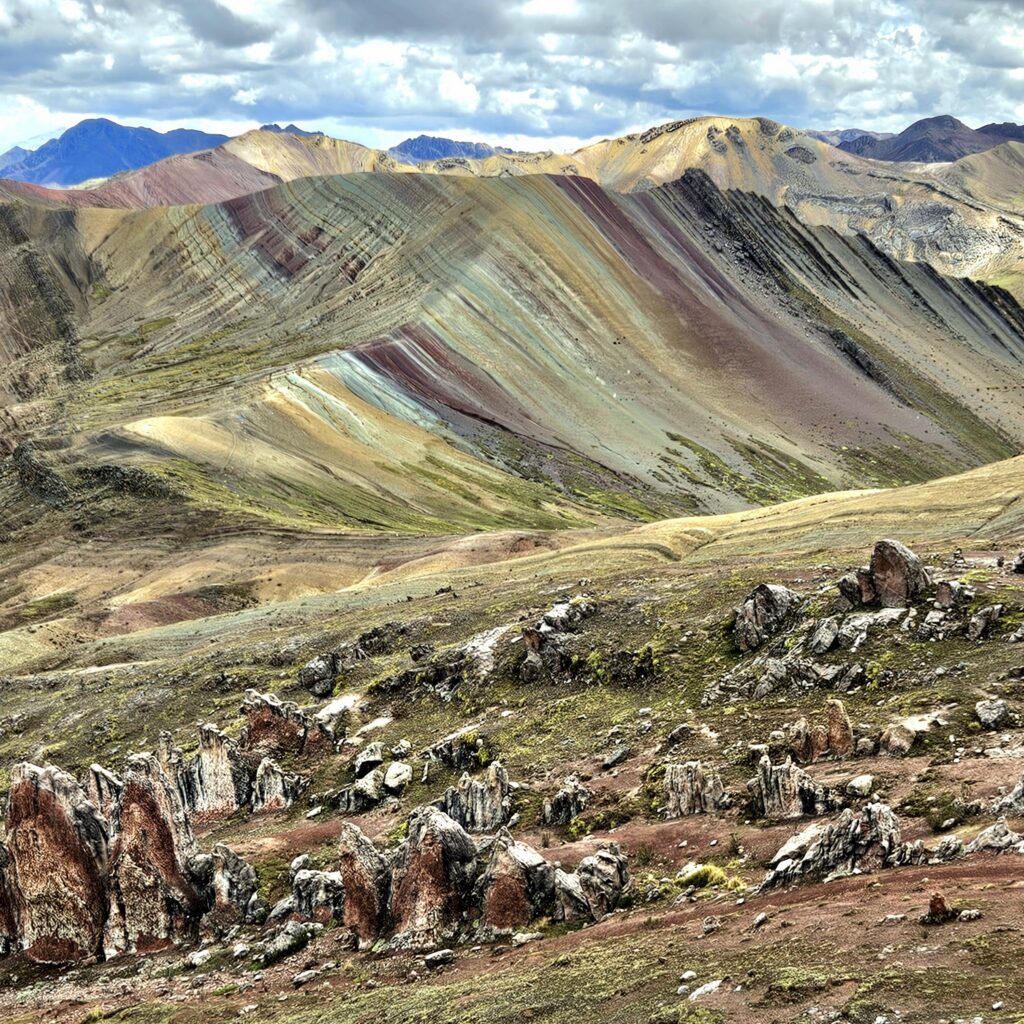
More than one place goes by this name, and the routes differ considerably in scenery, accessibility, crowds, and the overall hiking experience. After comparing them, I chose Palcoyo Rainbow Mountain for the November 2027 retreat.
Why Palcoyo?
Palcoyo offers colorful mountain ridges and expansive Andean views, with several viewpoints. Compared with the more famous Vinicunca route, the Palcoyo walk is generally shorter and less demanding.
It also tends to attract fewer visitors than Vinicunca. That makes Palcoyo an appealing option for a group with different hiking backgrounds. We can enjoy an extraordinary landscape without making the most challenging possible route the main objective.
Remember that Palcoyo is still at high altitude. The thinner air can make walking more difficult than the distance alone suggests, so acclimatization, a steady pace, and listening to your body are essential.
I have written a separate article comparing the different options if you would like to understand the differences before traveling:
Which Rainbow Mountain Hike Is Best: Vinicunca, Palcoyo or Pallay Punchu?
For the 2027 retreat, Palcoyo is included in the program, so you don't need to arrange a separate trip.




You Don't Have to Be an Experienced Hiker
One of the most rewarding parts of leading hiking retreats is seeing what happens when people discover that they can do more than they expected.
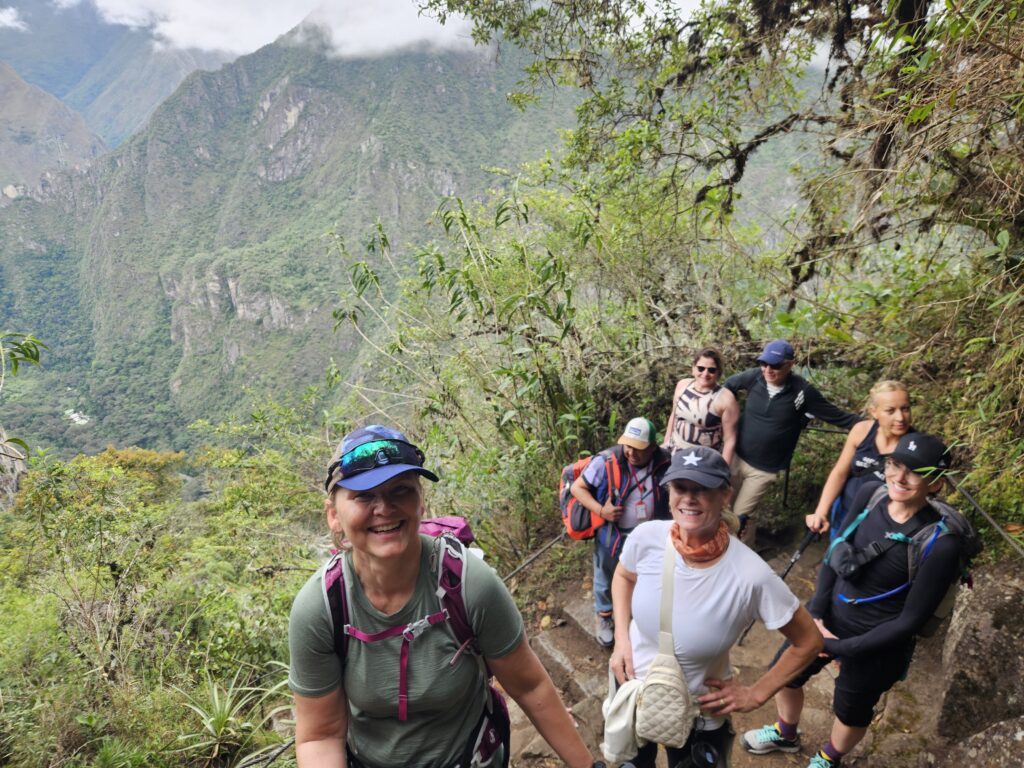
During my previous Peru retreat, some of the participants had never really hiked before. They were not experienced trekkers who had spent years preparing for high-altitude adventures. They came from different backgrounds, had different fitness levels, and expected different things from the trip.
And then they started walking.
They explored ancient ruins, followed mountain paths, crossed unfamiliar landscapes, and gradually became more comfortable with the experience. At times, the altitude or the physical effort demanded extra patience, but there was also plenty of encouragement, laughter, and shared accomplishment.
The feelings people expressed afterward were overwhelming. They were proud of what they had achieved, moved by the scenery and surprised by how much the experience had given them.
I see that repeatedly on my retreats. Achievement isn't necessarily about reaching the highest summit or walking the longest distance. Sometimes it is about taking the first step on a trail you never would have considered.
Peru offers many opportunities for that kind of discovery. Our program includes different types of excursions, and not every day is a strenuous hike. We combine activity with cultural visits, yoga, rest, and time to enjoy the surroundings.
Of course, the altitude means that Peru requires sensible preparation. You should be comfortable walking, open to a steady pace, and willing to respect your limits. Don't rush high-altitude excursions.
But you do not need to be a mountaineer.


Is This Peru Yoga Retreat Right for You If You Don't Practice Yoga?
Yes. You do not have to be a regular yoga practitioner to join.
Yoga is part of the retreat, but the journey is also about hiking, culture, nature, history, and discovering a part of the world that may be completely different from your everyday surroundings.
Our yoga sessions complement the active program, creating time for movement, breathing, and relaxation. If you already practice yoga, you can maintain your routine in a beautiful setting. If you are relatively new to yoga, you can join at your own level.
The same principle applies to the group as a whole. People come for different reasons. Some are drawn by Machu Picchu, others by the mountains, the culture, the yoga, or simply the opportunity to travel somewhere new with a small international group.
Many participants travel on their own. Joining a retreat means you can explore Peru with a group and the support of an organized program, without planning every transfer, excursion, and activity yourself.
For me, that is one of the advantages of a small-group retreat. You get the structure of a shared journey, but still have room to experience it your own way.
Why I Am Returning to Peru in November 2027
When I first started planning retreats in Peru, I knew I wanted to include Machu Picchu and the Sacred Valley. After staying at Willka T’ika, experiencing the gardens, and getting to know the setting, I knew I had found the right base for this journey.
The first retreat confirmed it.
I wanted to return to the same place, work with the local team again, and share the experience with another group of travelers. So I reserved the dates for November 2027.
The next Peru Yoga and Hiking Retreat, including Machu Picchu and Palcoyo Rainbow Mountain, will take place from 6–16 November 2027.
The program combines ten nights of accommodation, yoga and meditation, guided excursions, cultural experiences, the Sacred Valley, and a visit to Machu Picchu. Palcoyo Rainbow Mountain is also included.
The retreat is designed for people who want to experience Peru actively, while still having time to relax and enjoy the setting. If you are considering joining, I recommend reading the full itinerary and practical information on the retreat page. You will find details about accommodation, what is included, the price, and booking conditions there.
Read the full itinerary and reserve your place for November 2027.
Related Posts